Showing posts with label 台上台下 On – Off the Stage. Show all posts

19 October 2006

Glenn Gould : au-delà du temps

Documentary by Bruno Monsaingeon (France/Canada, 2005, 1h07mn)
13 Octobre 2006 20h30 Auditorium, Musee du Louvre

Glenn Gould plays Bach

Credit: vagifabilov (Norway)

This clip of the young Glenn Gould at practice shows his two most vivid qualities as a pianist -- a genius and an eccentric. Look at the way he hums, the way he moves his hands and his whole body, the way he places his piano, the way he puts his legs, the way he dresses, the way he searches for inspiration, the way his emotions overwhelmed him, the way his fingers flies on the keyboard, the way he stops his practice... nothing is "orthodoxical" as the rules for a classical pianist, in particular, his low position to the piano and his peculiar body movements. He was recognised as one of the greatest pianist of the 20th Century at a young age, but the canon rejected him for the fear of breaking down the so-call "system", another old story in the development of modern and contemporary arts.

Glenn H. Gould (1932 – 1982) is famous for his unique interpretation of Bach's Goldberg Variations. This Canadian pianist loved to hum while he played, his recording engineers once proudly explained how successfully he was able to exclude his voice from his recordings. These hummings for Gould are subconscious singings, and increased proportionately with the inability of the piano in question to realise the music as he intended. In another word, his voice becomes part of the music compensating the techinical problems of his piano.

When he plays, no matter in live performance or in recording studio, he has to bring with him his old chair his father had made even when it was completely worn through. This chair is so closely identified with him that today it was covered in a glass case and is in display in the National Library of Canada.

This genius gave up live performance at the age of 32 (in 1964) and concentrated on studio recording, simply because his piano music is not only for the audience to listen to, but to watch and listen to and move with. That’s why we can see him playing today. It is said that Gould would never play a piece the same way twice. His favorite is Bach, when he plays Bach, it’s not him who’s playing, but Bach himself comes to life. In the documentary, he says while playing The Art of Fugue, "this note is a mistake. Bach would have amended it if he were still alive."

Here comes the most beautiful interpretation of Bach's Goldberg Variations recorded in around 1981. Are you ready for an awesome moment of trance?

Glenn Gould plays Goldberg Variations Aria & var.1-7

Credit: opus3863 (Japan)

8 October 2006

Nessun dorma

Nessun Dorma (Let No One Sleep), is my favorite opera aria. It was so heartbreakingly beautiful that everytime when I listen to it, I sink deep into it.

This aria from Giacomo Puccini's (1858 - 1924) opera Turandot (1920-1924), was written in 1924 and premiered on 25 April 1926 in Milan with the Spanish tenor Miguel Fleta as the Prince, Calaf. However, it was Luciano Pavarotti (b.1935) who made Nessun Dorma famous!

Here is the version Pavarotti in live in Paris 1998 (12 July, one day after the French championed the World Cup and one day before their National Day). It was a pity that at (1'58" - 2'12") in the video, there should be two lines of chorus which was missing during the performance. It was definitely a producer's faut not to arrange choirs!
Click 2 times on the Play icon, please.


Courtesy: boellebent (Demark)

Nessun dorma! Nessun dorma! (No one sleeps! No one sleeps!)
Tu pure, o Principessa, (Even you, oh princess,)
nella tua fredda stanza guardi le stelle (in your cold room look at the stars)
che tremano d'amore e di speranza... (that tremble with love and hope!)

Ma il mio mistero è chiuso in me, (But my mystery it is locked in me)
il nome mio nessun saprà! (And my name,no one will know!)
No, no, sulla tua bocca lo dirò, (No, no! On your mouth)
quando la luce splenderà! (I will say it, when the light will shine!)

Ed il mio bacio scioglierà il silenzio, (And my kiss will break the silence)
che ti fa mia. (that makes you mine!)

Voci di donne (Chorus):
Il nome suo nessun saprà... (His name no one will know...)
E noi dovrem, ahimè, morir, morir! (And we shall have, alas, to die, to die...!)

Dilegua, o notte! Tramontate, stelle! (Disperse, o night! Vanish, oh stars!)
Tramontate, stelle! (Vanish, oh stars!)
All'alba vincerò! (At daybreak, I will win!)
Vincerò! Vincerò! (I will win! I will win!)

Here is another version performed by the famous Three Tenors, Plácido Domingo, José Carreras Coll and Pavarotti in Dodger Stadium in Los Angeles for the 1994 World Cup finals with choirs.


From the lyric, we know that it's not a sad piece of music, but the "heartbreaking" mood is in the melody. This is the opening song of Act III, when the Prince is singing alone on the stage, waiting for the sun to rise and for Turandot to love him. In the background, the Chorus' sombre repetition of Turandot's order that "No one in Pekin is allowed to sleep tonight, until his name is found out" is like a phantom besetting the Prince's hope, like the ghost of Lo-u-Ling waiting for her revenge. Though the prince is hopeful and confident in his words, the chorus lines remind him of the cruelty of Turandot, and his heart sinks (that's why I was upset with the Parvarotti 1998 version). The G major becomes the key signifying "dark hours before sunrise", inspiring the Prince's fear of a failing love and Turandot's terrified avoidance of a marriage with the unknown Prince. Love becomes a war, and everyone is agitated and sleepless tonight.

Turandot (1920 - 1924)

So, what's the story about? Who is Turandot?

Turandot is the beautiful cold-hearted femme fatale Princess of anncient China, whoever wants to marry her must answer her three riddles, either he succeed or he beheaded. In Act I, at night, when the moon rises, the unknown Prince, Calaf, was bewitched by her beauty when she first appeared in the balcony to give death order to the Persian Prince. Calaf stikes three times the gong posing himself as the suitor of Turandot.

Act II, Turandot explains in her famous aria In Questa Reggia that her ancestor, Princess Lo-u-Ling, was ravished and murdered by a foreigner, and now out of revenge she has sworn to never let any man possess her. She warns the Prince to withdraw, but he refuses. The Princess presents her riddles:

"What is born each night and dies each dawn?"
"Hope."
"What flickers red and warm like a flame, but is not fire?"
"Blood."
"What is like ice, but burns?"
"Turandot!"

The Prince suceeds and it's Turandot's duty to marry him. Turandot get angry and pleads her father / Emperor not to leave her at the unknown Prince's mercy. The Prince offers her his riddle, "Bring me my name before sunrise, and at sunrise, I will die."

Act III opens with Calaf's Nessun Dorma with the distant repetition of Turandot's order to search for his name. Calaf's maid, Liu, is tortured by the soldiers for the Prince's name. Liu, who loves the Prince, sings, "The name that you seek I alone know." Turandot demands it, Liu answers, "Love", and suicides. Terrified by Liu's suicide and Turandot's cold-heartness, the crowd withdraws leaving Calaf and Turandot alone on stage. Calaf tries to convince Turandot to love him but in vain. He holds her and kisses her, and she feels herself turning towards passion.

Finale: Dawn is breaking, Turandot approaches the Emperor's throne and declares, "His name is .... Love!" (Curtain falls)

The beauty of the Opera is in the enigmatic and poetic of the 3 deadly riddles and the final resolving riddle. Wasn't Puccini irrational in the Prince's dumb move of posing the last riddle to Turandot and giving her a chance to escap and chop off his head?

Well, Calaf doesn't say "Guess my name or you will die" but "Bring me my name and I will die". He actually wants to lose the game since whatever Turandot guesses, it would just be his name. He wants to marry her, of course, but he wants to defeat her cold-hearted defensiveness and have her fall in love with him. He will then die, in the sense of loosing himself completely to her and her love.

In Nessun Dorma, Turandot hasn't yet figured out all this love poetry business, and still thinks that she just has to get someone to reveal the Prince's name and then she can chop off his head. So she puts out a decree that no one in Pekin is allowed to sleep until the name is revealed.

When Puccini wrote the opera in 1902, it was a period of vexed relationships between China and the Western powers. In Europe, people were fascinated with Chinese art and culture at the same time, afraid of its "barbarism". Puccini's creation of a cruel Turandot while employing the beautiful Chinese folk songs as the musical themes for the opera is a classical love-hatred Western reaction towards China at turn of last century.

According to a interesting musicology study by Johathan Petty and Marshall Tuttle (2001), the Key signature is highly symbolic in the Opera. Throughout Act I, Puccini emphasizes Calaf's D Major (D) as leading tone to Turandot's E Flat Minor (Eb). This is a symbol of a definitive phallic threat from D which she seeks to deny. This threat is made explicit when Calaf rings the gong in D major, releasing energy that abducts Turandot's motif, and incites the Prince to modulate upward into Eb, signifying his surrender to Turandot's imperious beauty, as well the Moonrise and the position of Turandot in the highrise balcony.

In Act II, the solutions to Turandot's 3 riddles occur to the key scheme of D-D-Eb, precisely consistent with the psychological drama of the opera. "Hope" and "Blood" riddles are sung in D, Calaf's signature, "Turandot" riddle is self-evident in the Eb signature.

Then Turandot takes the patriachal C Major to plead to her father, when he insists that she should obey her own law, she crawls from C major up one octave to her father's C.

In Act III, Nessun Dorma starts with the chorus in Turandot's Eb, accending to Calaf's D. The power axis is reversed and thrusts Turandot's Eb and Bb down when the principle melodic material of the aria arrives in D, having released itself from the power of the Eb. And the final climax achieved on the word 'vinceró' is on A, the key which conquered Lo-u-Ling's Fb minor.


Courtesy: FamiliaOrero (Argentine)

This is another version by one of The Three Tenors, Placido Domingo, with The Metropolitan Opera in 1988, here the chorus lines are back and the stage design is wonderful.

This analysis of Petty (2001) gives another aspect of how music articulate psychological changes in the characters. Such as in Nessun Dorma, it's so touch simply because there are some many contradictory moods and emotions going on at the same, they are beyond the description of words but music!
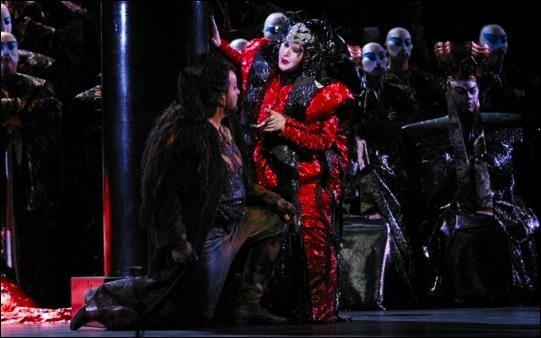
Photo credits:
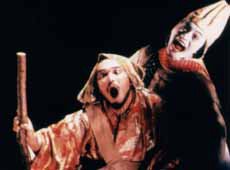
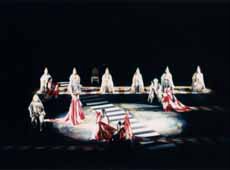
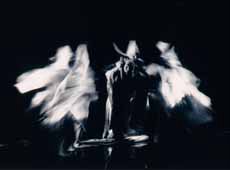
2002 coproduction of the Mariinski Theatre, St. Petersburg and the Festpielhaus Baden-Baden.

4 October 2006

One Note Symphony

One Note Symphony - Yves Klein
Concert - Contemporary Music
04 October 2006 22h20-22h55
Grande Salle, Centre Pompidou

Click at the "Play" icon, 2 times... please!


29 September 2006

Quartett - Heiner Muller and my nightmare

29 Sept 2006
20h30
Conservatoire National Superieur d'art dramatique
D'après Heiner Müller
Mis en scene: Matthias Langhoff
Décor,films: Matthias Langhoff
Lumières: Frédéric Duplessier
Avec: Muriel Mayette, François Chattot de la Comédie-Française
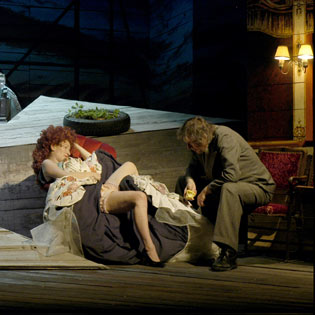
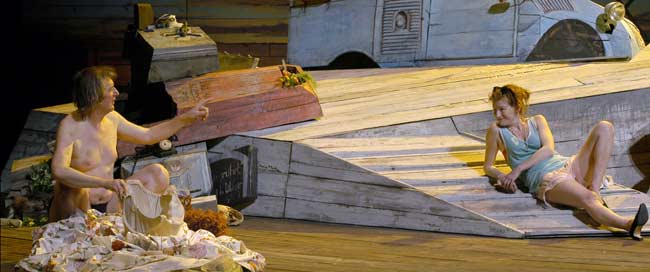
Photo credit: Theatre de la Ville


"Don't ask me!"
-- This is not a theatre critique。

[Enter Selina A and Selina B]
A. I am sad.
B. Pourqoui?
A. Can you imagine how hard it is for me to take this?
B. Quoi?
A. Can you imagine how sad I am?

B. Pourquoi?
A. Can you understand my frustration?
B. Quoi?
A. No, you can't.
B. Pourquoi?
A. Nobody understands.
B. Quoi?
[ A pause.]
A [Laughs]. Nothing! [turns away from B, goes out]
[B stands alone, perplexed]
(light slowly out, music Q12, goes.)

It's a very powerful performance, in adoptation, in directing, in acting and I love the set design... and yet, I sat there, motionless, like an alient fallen from the outer space... can you just tell me what you are saying??

I am sad. I am sad and frustrated -- for me, I understoo
d nothing! Why the language barrier is so high, so much higher than I imagined, too high for me to get over... I felt so helpless, so desperate... I can't understand what they are saying!!... I was a deaf in the auditorium. How much longer will it take for me to understand their langauge? their stupid french language!!??!!!

Hi? anyone there? anyone hear me??

22 September 2006

Le Grand Inquisiteur


Le Grand Inquisiteur
22 Sept 2006 (21h - 22h)
Theatre des Bouffes du Nord

Mise en scène: Peter Brook
De: Fedor Dostoïevski
Adaptation: Marie-Hélène Estienne
Avec: Maurice Bénichou & Ken Higelin

Le Grand Inquisiteur in Book 5 of Les Frères Karamazov (卡拉馬助夫兄弟們)


"L'action se passe en Espagne, à Séville, au seizième siècle – à l'époque la plus terrible de l'Inquisition.Le Christ revient parmi les hommes sous la forme qu'il avaitdurant les trois ans de sa vie publique. Le voici qui descend vers les rues brûlantes de la ville où justement la veille, en présence du roi, des courtisans, des chevaliers, des cardinaux et des plus charmantes dames de la cour, le Grand Inquisiteur a fait brûler une centaine d'hérétiques."
-- Le Grand Inquisiteur (extrait)

坐在這個古舊的劇院內等開場,突然有點感動。這是整年來第二次踏進劇院看戲,是從哪裡來的勇氣,何以忽然認為自己會聽得懂?可能太久沒有踏進劇院,人開始感到失落。

可是我做了一個錯誤的選擇。看到是 Peter Brook的戲,心想81歲的老人家為你導戲,你還有甚麼藉口可以錯過了?但我應該知道,這將又是一個文本極重的演出,法文,這個門階依然踏不過去。結果,全力以赴地聽了十五分鐘,集中力開始不行了。加上 Dostoïevski 的名作 The Brothers Karamazov (1879-1880)也沒看過,對於這一節對宗教、自由和人性的大審判也不甚了了,結果亦只能脫離文本,做看戲應做的事 -- 看、看、看。

舞台是一貫的空蕩蕩,只有一張約 3 m x 2 m 的 5吋高灰色platform,台右上 放著一張黑色圓形小本凳,platform邊的台左下位是另一張凳。燈火是維持不變。身穿黑色長褲長衫的Alyosha / Christ 從左邊觀眾席走到台左,坐下,赤腳。黑色長褸長褲的Ivan / Inquisitor 從台右幕進場,站在台右,舞台呈對角線,焦點集中在兩人的距離。

無神論的哥哥Ivan 開始給忠於宗教的弟弟Alyosha說故事,The Inquisitor質問耶穌為何要再一次出現在人群中,阻礙著教會的工作。他以耶穌拒絕撒旦的三次誘惑 (The temptation of Christ) 而換取自由的故事來證明耶穌錯了,並且不應在這個時候 (十六世紀)再次出現。人性是懦弱的,而人是愚昧的,耶穌誤信了人類,給予人自由選擇的權利等於剁奪了他們受苦贖罪的機會,人類只有永遠的苦難。只有透過撒旦式的死亡和毀滅,人類才能在無知的快樂中結束這個永久的苦難。而 The Inquisitor 及教會將會負起這個撒旦式的責任,所以,「這裡沒有你的事了,我現在命令你離開這裡。」

Christ 站起,45度走向台右上,親吻了The Inquisitor,再45度向台右下離開舞台,路線剛好呈一個三角形,亦即天主教中的 trinity。這是演員在整個演出中唯一的動作。The Inquisitor 呆坐在那裡,這一吻彷彿在他心裡蕩起了愛,但他依然選擇隨著他的想法走向死亡。

一個小時的密集式獨白,結集哲學和神學爭辯,真夠我受了。只記得不斷聽到 conscience 和 liberte這個字。看戲也看觀眾。我坐在山頂,是觀察別人的最佳位置。開場不到十分鐘,已有五分一觀眾合上了閉目 -- 是深思?是養神?只他們自己才知道了。

15 February 2006

Not Everything Creative is Copyrightable?!

史坦尼斯拉夫斯基出現前,劇場世界可謂由劇作家一手遮天,流傳下來的亦只有劇本,所以今天我們認識莎士比亞、莫里哀、易卜生,但導演的名字被遺忘了。荷里活的商業明星式製作,推翻了整個權力系統,以導演、演員的名聲為號召,編劇幾乎閃到地下去了。現在劇場可以說是編劇與導演並駕齊驅,但法律上,編劇的文字知識產權受到保障,而導演的形體、視像創作卻難以具體界定及注冊為知識產權。最近在美國百老滙揭起官司直接指向這一問題的利弊。04年十月, Tam Lin一劇之前導演Edward Einhorn執導該劇兩個月後,因和編劇Nancy McClernan意見不合而遭解約,一亳子也沒有入袋。演出如期舉行,隨即Einhorn向該劇團提出司法訴訟,指該團侵犯他的知識產權。Einhorn指他為該劇作的導演創作果為他個人擁有的知識版權,該團需就過往多次重演的每一場支付版權費,最高合共美元三百萬。官司成為了劇場界的一大爭議,編劇認為此舉是「綁架」了他們的劇本,部份導演擔心會影響現時的資訊流動和參考,隨時踩線亦恾然不知。如果某導演導了一個新編本後即註冊版權,以後就沒有人再敢改導同一劇本。雖然案件排期至今年四月正式審訊,但其影響已出現,例如美國Dramatists Play Service發出的許可證,只有劇本而不再包括導演筆記,Theater on Film and Tape Archive亦表示,越來越多的導演和編舞為其作品錄像訂下觀看限制。

At the tech rehearsal of the Off Off Broadway production of Tam Lin, a play about a clash between mortal and immortal worlds, a fight between the playwright, Nancy McClernan, and the former director, Edward Einhorn, took the stage. Two days later, the director was fired after two months of unpaid work. The playwright then supervised the remaining rehearsals, either largely restaging the play or retaining most of Mr. Einhorn's contributions, depending on whose side you believe. Soon, Einhorn filed a lawsuit claiming that his staging contributions to Tam Lin constitute a copyrighted work of intellectual property, owned by him, and that the defendants, McClernan and her colleagues, must therefore pay for infringing the copyright which is calculated at the maximum of US$3M. The issue at stake is if a director should be able to copyright his ideas about how to stage a play. Many playwrights who against this feel the danger of the kidnapping of their plays, others saying that if each director's staging of a relatively new play had copyright protection, very soon there would be no staging options left. However, the consequence is already here, e.g. the Dramatists Play Service no longer includes detailed stage directions and other helpful annotations in the scripts they provide to licensees; the Theater on Film and Tape Archive said more directors and choreographers now request restrictions on viewings of their work. The trial of the Einhorn's case is scheduled in April.
Image 1: Tam Lin's publicity Post (image from Theatre Five)
Image 2: Edward Einhorn, Artistic Director of Untitled Theater Company
(Image from
http://www.untitledtheater.com/Edwardbio.htm)

2 February 2006

《最噁心性愛文學獎》


荷里活剛剛頒完奧斯卡,另一邊厢又有一個名為Golden Rapsberry (Razzie) Award 的頒獎典禮為荷里活助慶。這個沒人問津的獎,今年已踏進第二十六屆,每年選出最差勁電影,最差勁男、女主角等,三月七日與奧斯卡同步發出,收了算倒霉﹗

出版界又有與諾貝爾文學獎相反的、被稱為英國「最討厭文學獎」的《最噁心性愛文學獎》,今年的提名名單陣容鼎盛,還有大家喜歡的「百年孤寂作家」Gabriel Marquez。最後,花落Giles Coren家。本為飲食批評家的Coren發表其處女作小說《Winkler》,隨即讓他擊敗其他十位入圍作者,成為最終得獎者,這些落敗作者除了Marquez外,還有前Booker Prize得主Salman Rushdie及美國旅遊及小說家Paul Theroux等。在《Winkler》的一場性愛描寫中,有一句長達138字的句子,中間沒有任何標點,最終以” Like Zorro”二字作結。有十三年歷史的《最噁心性愛文學獎》目的在於制止現代小說中粗糙、無品味、馬虎的性愛描寫,得奬者將獲頒發一五十年代性愛造型的「奧斯卡式」雕像及一支香檳。
Photo: Beating off stiff competition: Giles Coren

Known as Britain's "most dreaded Literary award, the Bad Sex Award 2005, goes to Giles Coren for his debut novel Winkler. An extract which comprises a 138-word long sentence followed by a two-word follow up "Like Zorro" describing the main character's penis "leaping around like a shower dropped in an empty bath" won Coren the award. Better known as restaurant critic for the Times newspaper, Coren fought off competition from several well-known authors including Nobel winner Gabriel Garcia Marquez, former Booker Prize winner Salman Rushdie and U.S. travel and fiction writer Paul Theroux. Now in its 13th year, the prize, which only targets literary fiction, aims "to draw attention to the crude, tasteless, often perfunctory use of redundant passages of sexual description in the modern novel, and to discourage it." The winner is awarded a semi-abstract statue representing sex in the 1950s and a bottle of champagne.


For all the longlisted passages:
http://books.guardian.co.uk/news/articles/0,6109,1652789,00.html

24 January 2006

出口藝術

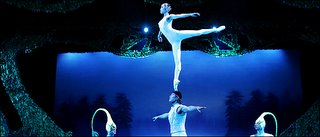
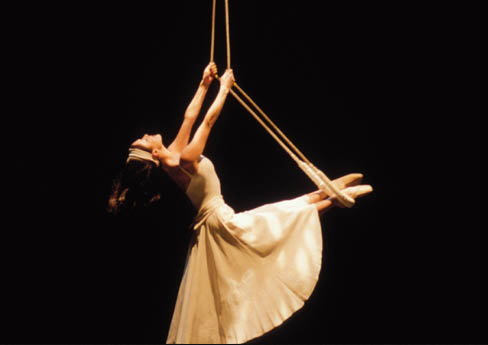
世界刮起大東風。繼「女子十二樂坊」的賣弄東方情調外,中國的藝術品又有新創意,這次肯定將成為世界奇觀,包管大家看得目瞪口呆。說的是「頭頂上的芭蕾」 -- 雜耍加芭蕾舞的中國版《天鵝湖》。由吳正丹演出的「東方天鵝公主」在「羅巴王子」魏葆華的頭頂懸空獨立,仿佛一祇純美的白天鵝完成「Arabesque」360度高空旋轉,再來一個180度向後彎腰,完美的技藝和合作,征服了世人、震驚了國際舞台的藝術家。這對王子公主已成為世界焦點,摘下無數國際金牌的同時,亦為本為僵化的中國雜耍開闢了一條新道路。中國版《天鵝湖》沿用柴可夫斯基的音樂,但故事內容稍作更改,以王子夢見一位美麗的女子被邪惡的老鷹變成天鵝作端,於是王子開始一段尋夢的歷程,他走遍歐洲、非洲、中東,南亞,最後來到中國的北京,這一安排使得雜技劇團得以通過舞蹈和雜技的形式充份展示各個地域不同的色彩。在紫禁城內,王子終於遇見了他的中國天鵝公主。今年,這個中國雜技版《天鵝湖》將出品至俄羅斯、日本、德國及美國等地作全球巡演。


Another Chinese Art is ready to be exported. The unconventional blend of classical ballet and traditional Chinese acrobatics in the Chinese version Swan Lake is sure to stun the world with the delicate Oriental Swan Princess, Wu Zhengdan pirouetting aloft on the shoulder and outstretched arm of the muscular Prince Siegfried, Wei Baohua. She then rose up, stunningly, on pointe on Wei's head with another pirouette in Arabesque. This is the radical reworking of Swan Lake by the Guangdong Military Acrobatic Troupe which is said to open up a new direction of Chinese acrobatics. Set against the original music of Tchaikovsky, the new version opens with Prince Siegfried dreaming of a beautiful girl who has been transformed into a swan by an evil eagle, a vision that propels him into a quest that takes him from Europe through Africa, the Middle East and South Asia before landing him in Beijing — a journey that provides the acrobatic troupe with ample opportunity for displays of local color. There, in the Forbidden City, he meets the young Chinese swan-woman he will make his bride. This West-meets-East take on Swan Lake is emblematic of the broad shift under way in China as state-sponsored cultural institutions move toward more market-oriented offerings. Now, the acrobatic Swan Lake is setting off for a world tour to Russia, Japan, Germany and the United States this year.


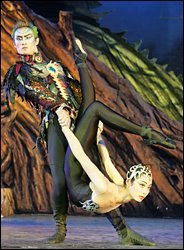
吳正丹演出的「東方天鵝公主」在「羅巴王子」魏葆華的頭頂懸空獨立,仿佛一祇純美的白天鵝完成「Arabesque」360度高空旋轉。(相片鳴謝︰上海城市舞蹈團)


四小天鵝被換成了四小青蛙,以手代腳翩翩起舞,還有32只天鵝旱冰群舞的大場面。(相片鳴謝︰上海城市舞蹈團)

30 November 2005

我要為世界歌唱

下午四點

在巴黎猶太區 Rue des Roisiers 的一間小咖啡廳遇上這樣的一個女孩。
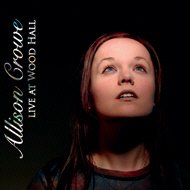
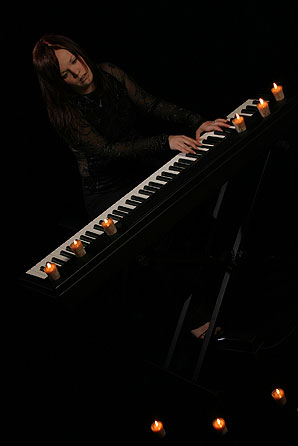
她名字叫Allison Crowe,來自加拿大的二十四歲女孩。喜歡自彈自唱,所以在鋼琴前加了一個麥克風。女孩有著特别渾厚的歌聲,喜歡激昂的曲目,激動時聲音特別響亮,有點嚷破喉嚨的感覺。

女孩喜歡大聲笑,所以每唱完一聲歌就會自己傻笑,告訴在場的每一個聽眾,我很開心可以為你們歌唱﹗女孩自己創造自己的歌曲,也唱偶像的名曲。女孩離不開情情愛愛,所以總要傷心地嚷著情人不要無情拋棄我。你們快樂嗎?女孩問。為甚麼快樂?真有甚麼值得你快樂的嗎?女孩又問。朋友說我很sacarstic,我是很sacarstic的,所以為大家唱一首歌,「I am happy now」。女孩說。

我甚麼都不會,只會唱歌彈唱。我甚麼都沒有,所以從加拿大跑到這裡為大家唱歌。

這裡,是位於這條猶太人聚居的小街的咖啡廳,7 Lezards。咖啡廳有搞音樂會的傳統,所以在地牢有一個小型的劇院,幾張桌子搭上梳發,可容納三十個客人,舒適地一邊喝茶一邊聽音樂。我們是趁了一個免費音樂會的名而來,不認這女孩,也不認識這咖啡廳,純粹因為是鋼琴爵士樂,更重要的是免費,乎合經濟及品味原則。

女孩用了兩個月時間,馬不停蹄,在南美和歐洲跑了一個圈,在各大城市找咖啡廳、酒吧等,讓她免費為來賓演唱。我在巴黎沒有朋友,也不是認識這個城市,我選擇了她作為我旅程的最後一站,因為我想像中的巴黎是很美的。她說。每一次,我都不知道有沒有人會來,如果有人來了,我會很高興。大家都不知道我是誰,但卻願意來這裡聽我唱歌,感覺很奇妙。如果沒有人來,我就當作是自己練習。哈哈哈﹗女孩喜歡大聲笑。

我不知道我會不會有出名的一天,但我這裡有免費的唱片要送給大家,如果大家想找我簽名,我會很開心﹗哈哈哈﹗女孩一邊彈一邊說。

離開了咖啡廳,口袋裡放著女孩的兩張唱片。記住的不是她的歌聲,而是她的話,我喜歡唱歌,所以我要為全世界歌唱。

相片來源及連結︰www.allisoncrowe.com

24 November 2005

A Ballerina Dream


有關舞蹈的電影我都不會放過,之前的 《浮生若舞》, 《舞出彩虹》、《舞動激情》等,都是我的心頭好。最近在報章上看到法國電視台藝術文化頻道arte,在十一月七日起連續播出一套別開生面的紀錄片,《有一天,我將成為舞者》。可惜沒有電視機,看不到。

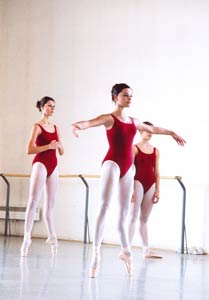
紀錄片以入讀巴黎國家音樂及舞蹈學院第一年的十三歲芭蕾舞生Camille為主角,導演Julie Lepkine貼身追蹤小女孩們艱苦訓練的經過,和同學間的互相扶持、互相競爭的真實世界,和一眾女孩追逐夢想的甜酸苦辣。

A series of new documentary, Un jour, je serai danseuse, by Julie Lepkine is now on shown on the arts and cultural TV channel, Arte France. Unfortunately, I don't have a TV to watch the programme. Another remarkable documentary on dance is The Company by Robert Altman. The other film on a dance student's life is Centre Stage . Others include Thomas Carter's Save the Last Dance and Stephen Daldry's Billy Elliot.

Lepkine followed Camille, the 13-year-old first-year ballet student of Conservatoire nationale de musique et de danse de Paris, for one year, documenting her life as a future ballerina in the process of harsh trainings, friendship and competition with classmates, and the painful process of realization of a dancer dream.

5 October 2005

拉丁美洲的氣味與節奏 ──朗天與葉輝對談 A Latin American Sensation

文字︰丁燕燕
圖片提供︰國際演藝評論家協會香港分會
原文刊載於十月三十日《明報》 世紀版

朗=朗天
葉=葉輝

朗︰我最近看《足球週刊》,提到巴西足球王朝,是當今世界最強足球隊,世界盃勢在必得。我對拉丁美洲的認識是從世界盃開始。1970年巴西三奪世界盃,我就看著球王比利在墨西哥揚威。你對拉美的認識是何時開始的?

葉︰差不多同期,大球場上演山度史對紐卡素,比利連環七腳,老球迷至今仍津津樂道。我相信巴西足球在1986年對法國的「世紀之戰」後就劃上了句號。與此同時,歐洲聯賽大量吸納拉美球員,巴西和拉美足球也日漸歐陸化,足球走向全球化了。

朗︰何謂「拉丁化」?

葉︰我建議以「細哨」朗拿甸奴為分界,他的踢法是街童式的,沒有歐洲足球訓練營出身的那種紀律和章法,是很個人化的演繹風格,實用而奇技化的個人表演。

朗︰會不會有一些欺詐成分?我記得馬勒當拿對英格蘭的「上帝之手」。他的球藝當然無可置疑,但問題是「球品」,偶然玩一些欺詐也無傷大雅。這樣是否更有魅力呢?這是不是你說的拉丁化?

葉︰不一定是這個問題。足球職業化,球員轉會費是天文數字,就涉及金錢問題︰「人牆」拉前五碼還是後五碼?或者像亨利那樣,球還沒放定就已經射入了,那到底球證判不判入球呢?這些取巧和判決是很資本主義的,和拉丁化未必相關。我要說的是像我們小時候在街頭踢球,整天出口術,老喊handball,爭論沒有沒出界──但根本沒有「界」。那是一種未經資本化的街童遊戲。

朗︰拉美國家貧富懸殊,貧民區的小孩在擠迫的街頭巷尾踢球,爭執總以詭詐的方法解決,他們練得一身好本領,左扭右拐,扭動蛇腰,與拉美文化同出一轍,你必須掌握特殊技藝才能擺脫貧困,出人頭地。在「上位」過程中,可能耍一些詭詐的手段,無論在音樂、文學、藝術也是這樣,一方面要求個人的技藝,一方面又有一種不拘小節、不羈的風格。
我記得1984年Gabriel Márquez 獲得諾貝爾文學獎,我那時開始接觸拉美文學,西西很早就介紹拉美文學,我84年才如夢初醒,連忙找來Márquez的《百年孤寂》。我記得第一句話是,「很久很久以後……」,和一般故事的「很久很久以前……」剛剛相反。書一開始就出現嘉年華會、馬戲班、飛氈等。這本書大大地開拓了我的想像力,就像當年的比利和馬勒當拿的足球一樣。

葉︰拉美文學如何抗衡殖民主義和全球化、將其獨有的話語和色彩帶到世界各地,當中有歐洲人的操作,包括Penguin的一系列翻譯,例如Márquez,Cortázar、Borges、Fuentes、Paz等。1974年,《四季》已做了一個Márquez的特輯。更早以前,香港已經譯介智利詩人Pablo Neruda的作品。Neruda 1971年獲頒諾貝爾文學獎,之前已有人譯過他的詩,另外,Neruda 和艾青是好朋友,艾青曾到智利探望他,1957年寫了一本詩集 ── 《海岬上》。

朗︰不過很多香港人認識Neruda是因為電影而不是因為他的詩。那是《事先張揚的求愛事件》(Postman)。王家衛的《春光乍洩》在布宜諾斯艾利斯取景,大量的街景、大瀑布、天涯海角等,聽聞令很多香港人到阿根廷旅行。但這些都是經過藝術處理的,你在拉美遊歷,印象最深刻的是什麼?

葉︰二十多年前,看過米高堅、Demi Moore主演的Blame It On Rio,那是中坑與未成年少女的忘年戀,發生在熱情奔放的里約熱內盧,森巴舞、陽光與沙灘、音樂等,將世俗不容的情慾浪漫化和合理化。近年的《樂滿夏灣拿》把古巴音樂炒熱了。電影、小說呈現的世界跟現實世界,極可能是兩個世界。旅行時最深刻的倒是街頭文化,如街頭足球、牆身噴畫、街頭音樂等。在餐廳吃飯、逛街,音樂一直圍繞在身邊。至於文學氣氛、詩化的東西,在旅行時很難察覺的。

朗︰這就是節奏。就是生活的壓抑性太重,社會權力架構說得太清楚,低下階層的人唯有靠強勁的節奏來維持生活的力量感,很多南美國家的社會集會中,例如嘉年華會,大家都跟著音樂舞動身體。動感讓大家覺得生命力澎湃。

葉︰我記得在五O年代,收音機經常播放鄧寄塵的《墨西哥女郎》:「啦啦啦……啦啦啦啦啦啦啦……有一晚我去到墨西哥,遇到一位墨西哥女郎……」。我想這是由於東方人和西方人都需要在生活壓力中尋找宣泄的出口。拉美文化是多種文化的合成,來自非洲的黑人文化,被流放到另一片大陸的歐洲人的另一種鄉愁,還有印第安文化,美國文化,歐洲人和非洲人將足球、音樂、繪畫、宗教的熱情帶到南美,與原住民、殖民後裔的文化融合,來到亞洲,為什麼是一些帶有歐洲風味的東西比較易被接受,像音樂,為什麼是抒情的「啦啦啦……」,而不是節拍急勁的非洲音樂呢?這反映了殖民文化如何在環球旅行的過程中找到適合的落腳地,就像航海者將不同地域的香料如辣椒、胡椒、花椒等帶到全世界。

朗︰去南美旅行,會發現它是很髒亂,這種髒亂加添了它的性暗示,性無論在道德上或是物理上,的確是有點污穢。但正是原始的、帶性誘感的髒亂和氣味,引發了一種野性美,和你剛剛說的《墨西哥女郎》,或西方電影,甚至中國電影,都成為「性對象」,熱情奔放的森巴女郎,最後訴諸「卡門」原型,令男人墮落,你要把她殺死時,她說,「雖然你殺了我,但我是自由的!」一方面她是性對象,另一方面是她對自由的呼喚,她令你捉摸不住,同時解放了你。這就是我剛才說的節奏與性,我們對身體的一種追求。東方人對身體嚴厲約束,一旦面對這種熱情奔放的可能性,渴望郤難以宣諸於口,我覺得很有趣。

葉︰這種氣味是很南方、很熱帶的,炎熱而帶有海風味道,像南亞、南非、拉美,氣味伴隨著節奏、音樂和渴求,很動物性,像半夜的猫叫、狗的哀鳴,將潛伏而未經馴化的情慾透過聲音、氣味宣泄出來。

朗︰我們又是另一種黃河文化,周朝以來的禮樂教化。雖然夏、商、周以來,應是平原文化,但我們的歷史想像是黃土文明,變成了帶有河殤的「擁抱海洋文明、告別大陸文明」,生命力集中南方沿海一帶,形成我們對海洋和生命的渴求。所以壓抑民族對拉美文化的熱情、動感有一種特別的喜好。不知這和香港的接收有沒有關係?

葉︰談到中國,國內很流行研究東亞「三國志」,即中國、朝鮮和日本的儒家文化;由西亞經中亞進入中國和印度的是阿拉伯或雅利安文化,比如印度南北文化是兩回事。我們談拉美美洲,很容易簡易概括。其實拉美諸國也有很大區別,墨西哥或較接近美國文化,中美諸家壓抑感很大,巴西要成為常任理事國了,秘魯、智利、烏拉圭、哥倫比亞和阿根廷的文化如何能簡單概括?我們遠距離看,拉美文化於我們就像東方文化之於西方人,可能有所誤讀。文化距離的問題,當然不是我們泛泛而談就能弄得清楚的。

2 October 2005

上茅廁的舞台哲學 – 鈴木忠志與身體回溯

原文刊載於《藝術地圖》二零零五年九月號
photo credit: LCSD, 《酒神》劇照
www.spac.or.jp

寫作文章當日,剛好是「原爆」六十週年紀念日,讓我想起三島由紀夫對戰後日本文學發展去向的一句話︰「戰爭的天空,像希臘的天空一樣藍」。他認為戰後日本文學應以「現代性」的觀點出發,以新的概念來看戰後的頹垣敗瓦。這種積極的態度也體現在各種藝術形式上,如當時被稱爲「地下劇場」的日本小劇場運動。

日本的小劇場運動在戰前已出現於東京邊緣的「築地小劇場」,當時的戲劇以易卜生的理論為主線,主張戲劇應以反映社會現實及個人自我意識為基礎。戰後日本被美國納入國際資本體系,基本上在政治、經濟和軍事各方面都成為了美國的附庸國。六十年代,學生與社會人士發起了反對《安保條約》的「安保鬥爭」,運動失敗後,年輕人便轉向以劇場形式尋找思想的出路。這時候的學生劇團如鈴木忠志的「早稻田小劇場」、寺山修司的「天井棧敷」、唐十郎的「狀況劇場」等紛紛在酒館或帳篷裡演出,對日本作為戰爭加害者及其歷史責任提出了嚴厲的批判。這個時期的學生戲劇風潮深受「存在主義」劇作家沙特的戲劇觀念的影響,隨後因對身體表現的自覺性而轉向對劇場身體的探索,對日本現代劇場起了很大的影響。其中,鈴木忠志便是一個不可不提的人物。

鈴木的舞台理論逆轉了演員和戲劇/劇場的關係。他認為演員的身體不是推進劇情的工具而是在「進行中的劇情」,演員是戲劇的中心,是表演的主體,只有透過演員的身體表現,才能見出戲劇的張力。鈴木早期的作品都在實驗這個理論,如《關於戲劇性的東西 I、II、III》(1969 – 1970)。在這個探索過程中,鈴木回到了「能」劇及歌舞伎的古典身體上,如《關》劇便是取材自歌舞伎大師鶴屋南北的多個作品而成。而「能」劇不依賴現代劇場科技,以純粹的身體為本位營造劇場意境的形式,更使鈴木深深著迷。鈴木從「能」的雙腳動作發展出一套特獨的身體語言訓練方式 – 「鈴木演員訓練法」。

鈴木的方法集中在兩種技巧的訓練︰一是以腹部呼吸,將橫隔膜降低,在胸膛及肩部靜止不動的狀態下讓氧氣進入腹部。透過這方法,演員便能更清澈明亮地在舞台上演說,即使他們只是安靜地站在台上,亦能集中於內在的力量,發揮身體的演現能量〈鈴木要求演員在台上「顯身」而不是「變身」〉。另一技巧便是「蹲步」或「踏步」。鈴木把上半身及下半身分開,要求演員保持上半身不動,以雙足用力踏地,配合腹部呼吸法,讓身體與地面的有意識溝通引發人對身體各個關節的醒覺,這方法具體地反映了日本文化裡身體與地板的親密關係。

事實上,這兩種技巧對戰前的日本人來說是與生俱來的「生活技能」。這又和日本傳統的居住及生活方式有關。鈴木指,日本傳統的房屋裡總有一條長木板走廊,兩邊的紙門薄牆內便是睡房,而日本人愛穿著襪在屋內走動,故此,為避免摔倒或搔擾到房間正在睡覺的人,大家都小心翼翼地蹲著雙膝走路或工作。長此以來,戰前的日本人都懂得如何平穩地蹲走同時保持身體重心。但隨著美國的兩顆原子彈炸毀了八成的房屋,1964年東京奧運前的重建,加上歷年來的地震,傳統的房屋已所乘無幾。而戰後的公寓再沒有木板走廊,現在的年輕演員亦失去了這種傳統的、內在的身體特徵。

戰後在美國文化的主導,另一改變日本人身體特徵的便是坐廁的引入。鈴木引述一位戰後導演Takeshi Tetsuji的說法,指傳統的日式踎廁可訓練下半身的用力方式。當一個人踎低臀部向下時,控制下半身的方法跟躬身行禮時一樣,而因為踎得太久會腳痺,所以大家都要專心一致,快快辦完大事,這便要以特殊的呼吸方法及下半身的肌肉控制法來配合。現在有了坐廁,以往集中單田力、控制下半身的技巧也慢慢消失了。

姑毋論這理點有多少破綻,鈴木從這些觀察中發掘出日本文化中的傳統身體,如在其名作《特洛伊女人》裡,演員便是以蹲的方式來表達內心感情。《特》劇改編自希臘悲劇,但鈴木巧妙地將它放置在戰後日本百廢待舉的社會現實中,構成了劇場內特殊的二元空間。以現代的劇場精神及全新的手法演繹經典名著是鈴木的一大特色,曾改編過的作品包括莎士比亞的《 李爾王 》、契訶夫的《 三姊妹 》、希臘悲劇《俄迪蒲斯》等。雖然他的表演理論源自日本的古典身體,但他深信,這種與生俱來的身體特徵是各個文化共享的國際語言。

除了領導日本鈴木劇團外,鈴木還是日本靜岡縣舞台藝術中心的藝術總監,並於1982至1999年間,於日本利賀舉辦日本第一個國際藝術節 ─ 利賀藝術節。今年九月,鈴木將帶領日本鈴木劇團到香港演出《酒神》。此劇改編自古希臘悲劇作家歐里庇得斯的《巴克哀》,鈴木透過重述酒神狄奧尼修斯與底比斯王彭提烏之間的衝突來闡釋他的世界觀。

1 October 2005

Squatting on the Philosophy of Performance ---- Tadashi Suzuki and Body Reconstruction


Today (6 Aug) is the sixtieth commemoration of the nuclear bomb in Hiroshima and this reminds me of a line from Yukio Mishima, “the sky of war is as blue as the sky of Greece”. He urged post-war Japanese literature to take modernity as its vantage point and to reflect on the post-war Japan with a new concept. The active reflection and optimistic attitude were some of the common traits of Japanese post-war arts scene. The Japanese little theatre movement is one of the examples.

Japanese little theatre started at the pre-war era and bloomed in the 1960s and 1970s. Following Ibsen’s social realism, the pre-war theatre was primarily concerned with individuality and social reality. This was the germination period that transformed theatre from sheer entertainment to theatre with a social function and set the background for Japanese modern theatre. After the war, Japan came under America’s greater capitalist system and was virtually a subordinate nation to the US in terms of politics, economy and military. After the failure of the anti- “US-Japan Security Treaty” movement, young Japanese began to seek alternative channels for their political views and there, they found the little theatre. The 60s witnessed the setting of students’ theatre groups which had a great impact on Japan’s modern theatre in the years to follow. Among them were Tadashi Suzuki, Shuji Terayama, Yukio Ninagawa, etc. These groups started with reflections and criticisms on Japan’s responsibility for the war as an invader and later moved towards the investigation of the theatrical body at the wake of the “self” under the existentialist influences.

Tadashi Suzuki is one of the theatre masters and theorists
emerged from the 1960s. For Suzuki, the actor’s body is not a tool to progress the plot but “the plot in progression”. An actor is the centre and subject of drama. It is only through his/her body that theatrical tensions and climaxes surfaced. Instead of serving the drama as one of the many elements, the body should be served by the drama to reveal its inner energy. The traditional relationship of body and drama is completely reversed in Suzuki’s theory. Suzuki’s earlier works such as Matters Related to Theatricality I, II, III (1969 – 1970) were exploring these principles. In the process of experiments, Suzuki found the classical body in Noh and Kabuki. He was attracted to Noh’s animal-energy in theatre (as opposite to modern theatre’s extensive deployment of electricity and technology) and the creation of theatrical effects through pure bodily movements and expression. Suzuki thus employed the unique virtues of Noh and Kabuki to create his own theatrical language and training – the Suzuki Method.

Suzuki’s method of training consists of two parts, the abdominal breathing and the stomping steps. The abdominal breathing is to train actors to “speak powerfully with clear articulation”, and even when they remain static on the stage, their bodies continue to speak to the audience. In other words, this is, for Suzuki, how an actor exists on stage. Suzuki also divides the body into upper and lower halves. The actors have to stomp on the floor in a semi-squatting posture for a certain period of time without swaying the upper body. This training is “to develop concentration on the body through controlling the breathing”. Suzuki believes that the “consciousness of the body's communication with the ground leads to a greater awareness of all the physical junctions of the body”. This is also a reflection of the close affinity between the body and the floor in Japanese culture.

In fact, these two techniques are innate survival skills for pre-war Japanese. Suzuki pointed out that in traditional Japanese houses there were wooden roka (hallways) situated between rooms which were constructed with paper walls and doors. Since walking in socks on the wooden floor would be very slippery and that somebody might be sleeping inside the rooms, everyone acquired the skill to walk with concentration and in semi-squatted gesture which is similar to Noh or Kabuki techniques. However, America’s two nuclear bombs destructed 80% of the traditional houses and the post-war apartments no longer provide the necessary environment for the training of the classical body.

Another effect of Americanization on Japanese life is the introduction of
Western toilet. Quoting from the post-war director, Takeshi Tetsuji, Suzuki explained that the traditional Japanese toilet requires one to squat and lower the hips. In order to maintain balance, one needs to learn how to put strength in their lower body in a specific way. Since this is not a very comfortable gesture, one learns to finish one’s business very quickly and this requires the skills of controlling breathing and the lower body muscles that regulate the breathing. Now, with the sit-toilet, one loses the physical ability to concentrate the energy in the lower part of the body.

Though this theory is not without fault, Suzuki is able to take the classical body as the basics of Japanese culture as well as the basis of his theatre works. Such as in Euripides’ Trojan Women, the actors used squatting posture to express their innermost feelings. By the deployment of modern theatrical techniques, Suzuki masters the skills of translating classical Greek tragedies into the contemporary socio-political context. Other adapted plays include Shakespeare’s King Lear, Chekhov’s Three Sisters, etc.

Today, Suzuki is the founder and director of SCOT (Suzuki Company of Toga) as well as the Artistic Director of Shizuoka Performing Arts Centre of Fujiyama. He also organized Japan’s first international theatre festival, Toga Festival, in 1982. This September, LCSD is going to present one of Suzuki’s important works – Dionysus. Through dealing with the conflicts between Dionysus, the god of wine, and Pentheus, the king of Thebes, Suzuki introduces his world-view to the audience.


Further Reading
Tadashi Suzuki. The Way of Acting: The Theatre Writings of Tadashi Suzuki, trans. J. Thomas Rimer. New York: Theatre Communications Group, 1986.

6 September 2005

道與藝同行 Taoism and Art on lines

道與藝同行 ── 建立一種劇場禪思
-- 茹國烈與優劇場對談

原文刊載於《藝術地圖》十月號
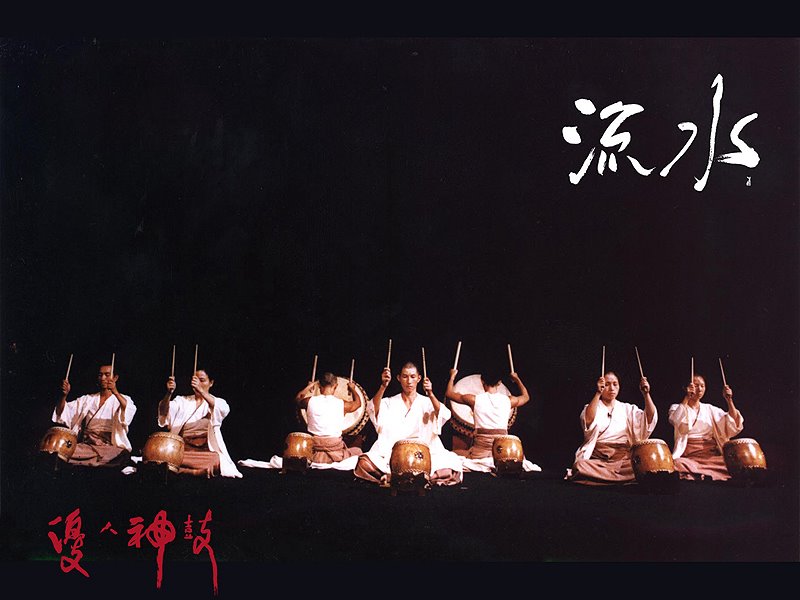
相片提供︰優人神鼓 http://www.utheatre.org.tw/

引子
看優劇場 (下稱「優」) 的《金剛心》與《聽海之心》,很有出塵空靈之感,不知道這是不是佛門所說的「禪」。那鼓聲,無論是若有所思的慢鼓,還是情緒激烈的密鑼緊鼓,在劇場裡迴盪著,讓你渾然忘了身置何處。舞台上總是彌漫著一股神秘的氣息,那介乎宗教、原始和人性、現代的張力,有攝魂的能力。我沒有宗教信仰,但卻愛上了一下一下的小鼓聲帶來的平靜的感覺。

茹國烈說,十年前龔志成告訴他關於這樣一群在山間生活、打坐、創作的優人們的事,他就跑到山上去看他們,翌年,把他們請來香港藝術中心演出。這次澳門文化中心請「優」來演出《聽海之心》,便把茹國烈一併找來作對談。茹國烈說,他們做的事情,是別人不敢做的 ── 建立一套表演系統。


劉若瑀 (劉靜敏) – 優劇場藝術總監
大家的蘭姐,1984年到美國隨Grotowski研習戲劇一年,回台灣後於1988年創立「優劇場」,由台灣民間祭儀與民俗儀式入手,隨後加入太極、舞蹈為訓練基礎。1993年起持續地結合擊鼓、靜坐和武術形式於創作中,並以生命修行為一生志業。

黃誌群 (黃志文) –優劇場擊鼓指導
出生於馬來西亞的黃志文,大家都稱他為亞襌師父,六歲開始學打鼓,十歲拜師學習中國武術,曾加入台北民族舞團及雲門舞集。1993年初次到印度,學習靜坐,同年受劉若瑀之邀,合創「優人神鼓」,擔任擊鼓指導,以「先學靜坐,再習擊鼓」的方式,改變了劇團的性質,奠定了優人以擊鼓與武術為表演形式的基礎。

茹國烈 – 香港藝術中心總幹事


西化的中國人碰到一條毛毛蟲

茹︰我們第一次見面是甚麼時候?

襌︰應該是一九九五年,打鼓的第二年。

茹︰我記得那是中秋節晚,那是四段小演出,其中有鼓樂《流水》,也有比較接近舞蹈和戲劇的演出。那是怎樣的一個時期?

蘭:那是混合的轉變時期。《流水》是很關鍵的一個作品。因為法國Avignon 藝術節的總監來看了《流水》,他很想要這作品,但需要把這二十分鐘的作品變成一個整晚的作品。之後他連續來了三年,我們也在這三年裡把作品編長。

襌︰《流水》本來是一個意象,那完整的演出需要一個主題。我就把以前的一個作品修改了,變成了後來的《崩》,山崩之後就有水從山上流下,就是《流水》。第三段,水流到大海,是現在的《聽海之心》,《聽海之心》前還創作了《沖岩》。另外一個作品《聽浪》,是用撞鐘的,修改了變成後來的《海潮音》。

茹︰優劇場以劇場為開始,到「溯計劃」時期加入民間表演的元素,再加入打鼓的訓練,再有了「優人神鼓」的出現,到現在以鼓為中心,這個轉變容易嗎?

蘭:這個轉變的中心是打坐。有一天呢…… 這是一個很關鍵的故事呀。那天我一個人在山上打坐,突然有一條毛蟲爬上我坐著的石頭。我看著牠越爬越近,覺得有得害怕,就順手一撥。一撥之後,我轉頭一看,呀﹗那塊石頭與牠身體的比例來看,我這輕輕一撥,就讓牠掉進萬丈深淵﹗嘣的一下,哎,我怎麼這麼暴力?我是知道牠經過我的身體就會走,牠不會傷害我的,為甚麼我要這麼暴力對牠?其實,很多的暴力就是你堅持要做甚麼,你就會去撥開一些東西。那時候,我就想到了我們的「溯計劃」。為甚麼去做劇場,都是從一個包袱開始,因為Grotowski說我是個「西化的中國人」,所以我要去證明我不是,所以要做「溯計劃」,怎麼把一種傳統的力量轉換到現代劇場呀,甚麼甚麼的。其實這計劃是一個很個人的想法,是自己認定的問題,可就要別人跟你的想法去做,很多的理論,自己總是對的。你看《水鏡記》裡那件二十公斤的戲服……可是突然間就覺得,其實甚麼都可以。

茹︰其實甚麼都可以…… 不會沒有了方向嗎?

蘭:重點是你抓緊了一個東西,你就會把它抓死,還把自己給卡死了。所以突然間,那包袱就卸下來,看清楚了。啊﹗我以再也不穿那麼重的衣服了。說實話,「優」早期的一些團員,他們的意志力都是非常強烈的。其實他們身上也在透露這個暴力。我突然明白為甚麼我們會鬧得很不開心,互相殘殺,因為每個人都要撥開別人。所以,那時我就知道,我不再需要「溯計劃」了,我不再抓緊東方人的身體了。

茹︰但這個「緊」仍是很重要,現在你們回望以前的這些本土化嘗試、東方人的身體的探索、乃至早期的戲劇訓練及創作,不都是很重要嗎?

蘭:可是在「悟」的那一刻,是輕鬆得不得了,感覺是,不做戲劇也無所謂,那是很重要的心理轉變。你看戲劇對我是很重要,但其實不做也可以。剛好那時亞襌來教打鼓,那,純粹打鼓也可以。如果沒有那時的打坐、「放下」的話,也不可能會這樣專心地去打鼓。


「道」與「藝」同行

蘭:「溯計劃」的下一個階段,就是Meditation(靜坐),這是一個嚴謹的階段,是在破Grotowski的「嚴謹」理論。原來Grotowski的訓練方法是要跟禪坐的方向相同,可是他那些訓練是非常劇烈,要在裡面放鬆不容易。參禪也是要走到相同的路,但是它必先放鬆,才能做到一件事。

茹︰「嚴謹」對你來說是不是系統化?系統化就是弄清概念,把方法搞清晰,或者是用語言來梳理它,把它理論化?

蘭:這嚴謹應該是回歸到體驗者本身的體驗,是一種很嚴格、很謹慎的體驗。其實Grotowski的訓練就是很嚴格和謹慎的,但他的方法的外在力量很大,你的身體一直在承受這些訓練。

茹︰他是利用身體的練習和動作來達到這個目標。

蘭:但是你要從這肢體上的嚴謹來進入放鬆就是不容易。那,Meditation也是很嚴格的,身體也是在承受一些壓力,可是因為它內裡是放鬆的,它外在形式的嚴格也因為Meditation的某些東西而改變,這「緊」與「鬆」的衝突也沒有這麼大。在生活上、人與人的關係上,都能找到一些放鬆的管道,但是它整個形式還是很清楚的。

茹︰那時候你們的宗教傾向很強嗎?你們第一次來香港做演出時,大家都覺得你們像和尚。

蘭:那時團裡沒有宗教,大家只是用Meditation做為演員的內在修練,那是我們開始往外跑的時候,也就是第三個階段。

茹︰變成一邊修練,一邊專業表演的狀態。

襌︰像有一年,我們有四個月的時間在外面跑,演員都很累。我就對他們說,我們現在是到了一個「警戒現前」的時候,這時候會有很多的負面情緒,我們怎麼處理呢?因為大家離開山上太久,開始沒有了安全感,開始覺得是不是應該回到山上去。

茹︰「修行」與「表演」的平衡問題出現了。

蘭:對,所以我們就開始各自去找師傅,那亞襌去了印度找他的老師傅,這就是《金剛心》出現的原因。一直以來,我們的打坐跟信仰是没有關係的,它跟宗教當然有關,但我們不是從宗教的角度來看藝術的。但是以後會改,下一個階段我覺得會是很精彩的。

茹︰你感覺到下一個階段要來了?

蘭:已經來了。我們在做《禪武不二》的時候,對禪宗開始有了興趣。為甚麼那個禪師問一句話,弟子一回答,那棒子打下來。那應對是怎麼來的?怎樣去印證這些答案呢?後來,有一次我們去了一個禪修營,那是很傳統的棒喝形式的。這個參禪的過程是非常精彩,因為它是當機立斷的。崩出來的東西不對,就要打,打了,再參、再想。

茹︰互動的關係是很重要的。

蘭:而且同時我發現它是一個很棒的戲劇訓練、表演訓練﹗如果我們要真正切入一個法門,對表演藝術來說,就是禪宗。

茹︰那你覺得禪宗可以結合藝術?

蘭:禪宗可以。

襌︰這麼多年來的歷史,從禪宗有文字記載開始,它跟藝術一直是息息相關的。它的理論是畫畫可以用,劍也可以用,茶也可以用,表演也可以。

蘭:而且我覺得不再拐彎抹角,直接到裡面去。因為之前,我們一直搞不清楚「優」跟宗教的關係,一方面要避掉自己不是很宗教的,是藝術的。可是另一方面,我們又修行、打坐,所以一直在打轉。可是有了禪宗,一切就立刻很清楚。

茹︰就是說,過去這段時間是「藝」跟「道」之間在找一個平衡,你覺得下一個階段你不需要再去管這個平衡。

蘭:不需要再去管。「是」就是「是」,因為你已經看見它,不需要迴避。其實藝術也躲不了這一關。


建立一個理論

茹︰過去這二十年,走到這一步,你覺得「優」是不是在發展自己的一個系統?

襌︰我希望留下一個方法。

茹︰是一個系統嗎?一個理論?

襌︰一個系統。

蘭:我覺得現在呢,我們也只能說越來越清楚,但它還不是結果,它還在過程中。

茹︰那你過去這幾年到過這麼多的地方,跟這麼多的人談過,你覺得有多少人在建立表演或戲劇系統,或是類似的事情?因為Grotowski已經是上世紀六十年代的事情,那個時候的西方戲劇正不斷地在找一個方向,發展出不同的系統、理論。現在,無論是東方或西方,有沒有人跟你一樣在走類似的路?

蘭:這麼具體的,好像沒有。

茹︰為甚麼?我覺得現今世界,戲劇作為一種藝術,它好像不是處在追尋一個方法的狀態中,你有同感嗎?

蘭:好像是沒有顧及到這一點,尤其是藝術界,表演藝術界。

茹︰我要問的是為甚麼「優劇場」會在台灣這個地方發生?你覺得這個社會造就了一個怎樣的環境讓「優」在這個地方出現?

蘭:我們那時候剛好是解嚴的第二年。

茹︰解嚴之前其實也不管這東西……

蘭:可是一直在抗爭怎樣去解嚴呀﹗

茹︰對對對對,社會已經放鬆一點了。

襌︰我覺得台灣這個社會,基本上是自由的,言論和藝術都很自由,而且在宗教的各個方面來說,都是很豐富的。

茹︰我覺得台灣的人文空間在華人社會裡是重大的。

襌︰最大最多元的。

茹︰還有兩個問題,第一個問題,其實是丁燕燕想問。她看完你們的演出,覺得女性在你們的演出裡是處在怎樣的位置?因為現在的演出都是體現男性的力量,女性當然也有她們的力量,但在這些作品沒有加以探討、發揮。我自己看過一些國外的擊鼓演出,也是男性主導的。但是「優」有男有女,如果作品裡,女性的能量也同時展現出來的話,那會怎麼樣呢?你們有沒有想過這個?

蘭:嗯…… 以前沒有想過,現在可以想想。

襌︰我以前沒有想過。不過我在編作鼓曲的時候,都把一些比較靈巧性的、技巧比較高一點的部份讓女演員來做。男演員的是比較節奏性的、力量型的。我們二零零二年做了一個作品,就是全女班的。其實我也在構思這個東西,但現在還沒成型。

茹︰我覺得這個可能性,會有很大的力量在裡面。

丁︰其實性別在「優」的作品裡不是一個重要的議題,這是因為宗教本身是沒有性別之分嗎?

蘭:對。另外一個原因,是有些動作、肢體運動上,都是以亞襌的一些標準來創造的,所以是比較男性主導。

丁︰我有這樣的一個感覺︰就表演形式來說,打鼓的部份往往會加上很多的形體動作,這種力的表現大部份是由男演員來做,女演員在打鼓以外,用身體演出的就是聲音。

蘭:這個感覺是對的。我們以前的作品比較多是這樣的。因為創作時都是根據亞襌的。像團裡曾經來了一個舞蹈系畢業的演員,只有她一個女演員可以跟男演員一起做形體練習。這也是一個條件問題。

丁︰可是「優」的男演員不也大部份是戲劇出身的嗎?

蘭:不多。都是演藝出來的……

茹︰甚麼演藝?

蘭:香港演藝學院呀﹗

茹︰哈哈哈﹗這是我想問的第二個問題,你們接觸蠻多的香港演員,你覺得他們的素質怎麼樣?不是好不好的問題,是有甚麼特點?

蘭:其實還是很不一樣,還是以個人論。我覺在我們內裡還是一個大華人社會,差別不大。

襌︰不過,我倒是有一個問題。像這次在澳門的工作坊裡接觸的人,我在懷疑,他們在表演上,有方法嗎?我沒有問他們,但是我從他們身上看不到有方法。

茹︰可以說,他們是想找到一個經驗,一個經歷。找不找到方法,可能不是他們現在最關切的問題,可能將來他們會想找。你們接觸到都是比較年輕的,對不?你不是要問他們有没有方法,而是對他們來講,方法重要嗎?他們需要一個方法嗎?方法是甚麼?

襌︰因為對我來說,如果沒有一個很清楚、具體的方法,做起來不容易。

茹︰但是没有方法也可以開始。所以問題就是說,他們想走很遠嗎?可能他們還沒有需要回答這個問題。這是年紀大的人的問題。

襌︰我們是年紀大的人啦﹗


結語
波蘭劇場大師Jerzy Grotowski (1933 – 1999) 是二十世紀前衛劇場最重要的人物之一,他於六十年代創立了「貧窮劇場」(Poor Theatre) 的理論,專注於劇場本質的探討。他提出將劇場內聲光華麗的外表除去,演員成為核心,與觀眾和空間的關係便是劇場最重要的東西。他提倡通過儀式化的過程,使演員的精神脫離世俗空間,真誠地面對自體的本質。此表演訓練的目的是在移除演員生理對心理過程的排抑,讓演員的身體消失,自由且豐富地展現心理震動。

八十年代,劉靜敏將此理論引介入台灣,現在「優劇場」的演訓方法,還可見其餘響。對談中,劉靜敏直言無諱地指出,打坐是通往戲劇表演的一個方法,和Grotowski的理論有著殊途而同歸的感覺。我想,無論這是一種繼承還是一種創新,「優」的「道藝合一」的劇場美學,本身已為藝術通向生活、生活進入藝術提出了最真確的道路。

26 July 2005

Theatre Critique: The Aim and the Means – Little Prince Hamlet

The handbill of Little Prince Hamlet says, "taking the two western classics of Little Prince and Hamlet as the departure point, the work aims at reflecting the traditions and aesthetics of Asian theatre" (translation). Confronting the domination of western cultures, a common trait among Asian countries is the reflexive inner fear and the struggles to exorcise western influences through western culture. This desire also leads to self-reflection, reform and advocacy of traditional values. In the 1980s, we had Wu Guoxing's Peking Opera adaptation of Shakespeare's Macbeth.

While the story is based on the two classics to investigates the eternal themes of life and death, love and hatred, truth and lies, reality and illusion, Little Prince Hamlet also takes its form to re-examine the aesthetics and vitality of eastern theatre. If we take this as the core idea of the show as stated in the handbill, the form then becomes more important than the content. Two scenes have achieved this. Mugiyono Kasido, the eminent Javanese ancient court dancer from Indonesia, plays the dying king Claudius with his lyrical yet energy-charged mask dance. Moving slowly on the table in serene and restrained movements, the man in mask (which neutralizes the gender roles of both the performer and the character in question) holds the toxic glass in his hands, brings it under the mask, and dies. The death of the King becomes the signifier of the death of the Queen (in the play, it’s Gertrude who died from the poisonous wine). An originally bloody scene transformed into a quiet, poetic and subtle performance. Another remarkable scene is “Ophellia's Song” performed by Daniel Yeung from Hong Kong. Daniel employs Asian theatre elements to re-interpret this famous episode. Cantonese Opera becomes an opera variation with Shakespeare's poem in Korean (which is incomprehensible for HK audience), Chinese dance (水袖) and its expressive body language becomes the key “narrator” of Ophellia’s sad love story. The sound and the movements penetrating each other to give birth to Ophellia's sorrow that pervades in the air, poignant yet gracefully contained. However, the focus of the whole piece jumps from one issue to another, causing confusion and interruption to the audience.

Other than the two choreographers /dancers, Arifwaran Shaharuddin from Malaysia and Kosei Sakamoto from Japan are also choreographers and theatre performers. Chang Jae Hyo from Korea is a composer and performer. Takayuki Fujimoto from Japan is the lighting designer of Dump Type and the multimedia artist of the show. Six of them work out the three main elements of eastern theatre: text, music and dance.

However, these countries' reflections and reactions to western cultural domination should be differed even they are grouped geographically under the same umbrella. For example, Arif’s opening video explores the identity crisis when Islamic Malays have a Christian name. This phenomenon becomes more vexed as religion is at issue here. However, for HK people, having an English name is something internalized, simply too “natural” to cause identity crisis. Such cultural differences exist, just that the understandings between the six artists are not deep enough to tackle the issues. Languages and ideas are the same stereotyping and discourses. As a theatre piece, it failed to develop a unique theatrical language in the discussion of Eastern and Western Theatre.

劇評 -- 手段與目的--《小王子復仇記》

原文刊載於《iatc 劇評網絡》二零零五年八月號

藝術節的宣傳單張這樣介紹《小王子復仇記》︰「借小王子及哈姆雷特兩個西方經典來反詰亞洲劇場自身傳統」。面對西方壓倒性的文化衝擊,亞洲社會常出現一種反射式恐懼心理,試圖以西方文化來擺脫西方文化,同時藉以反省、革新、發揚自身的傳統藝術。如八十年代便有吳國興演繹京劇版《麥克白》的《慾望城國》。

《小王子復仇記》以兩個故事做為內容大綱,探討生與死、愛與恨、真與假、虛與實等人生命題,同時以表演形式來探索東方劇場的美學與能耐。對應傳宣字句,此劇形式應重於內容。其中兩段演出做到了。來自印尼的Mugiyono Kasido以傳統爪哇宮廷面具舞演繹垂死的國王克勞狄斯,傳統的面具令表演者及角色性別模糊,男舞者以柔美細緻卻極具內在力度的舞姿從桌子上走過,當他舉起毒酒,喝下而死,國王之死即變成了皇后之死。加上爪哇宮廷舞的慢與力的碰撞,在短短數分鐘內,將原著中沸騰而血腥的一幕變得寧靜、詩意而富美感。而香港的楊春江則以吟唱、水袖及身韻來演繹奧菲莉亞凄婉的情殤之歌。自創的變奏粵曲調子,配上韓文版的沙翁詩句,雖對不諳韓文的觀眾來說只是「咿咿呀呀」,但配上柔弱輕幔的水袖,其感染力毫不遜色,悲慟之處深沉而含蓄,淡淡的苦澀,卻扣人心弦。至於其他部份,則時而內容主導,時而將「形式」變身為直接「內容」,使人感混淆、鬆散,焦點不定。

除了舞蹈出身的Mugiyono及楊春江外,馬來西亞的Arifwaran Shaharuddin及日本的(土反)本公成同是戲劇及舞蹈家,韓國的張在孝則是傳統音樂表演者,日本Dump Type燈光師藤本隆行負責多媒體製作。六位藝術家走在一起,包辦了東方劇場形式中包含語、樂及舞。

然而,雖同是亞洲劇場,但不同的區域當中必存在差異;面對西方文化時的迷思、創新定當也不一。例如,開段中,極具政治批判精神的Arif以錄像探討英文名字這個現象,為什麼一個回教徒要改英文名字(Christian Name)﹖這當中除了文化外,多了一層宗教衝突。但對香港人來說,這現像已被徹底內化,不續存在。諸如的差別尚有很多很多,可惜藝術家之間的交流、對話未能深入,對亞洲文化、身份的反思亦顯得有點老生常談,離不開Stereotyping及東方主義的思維,未能在眾語喧嘩的文化論述中建立劇場獨有的語彙與觀點。

4 July 2005

劇評︰森林的奇想── 水嶋一江的 Stringraphy


原文刊載於《LCSD 網絡評論》二零零四年九月號

(相片提供︰日本杯杯線樂團)

「有一天,我站在森林裏,突發奇想︰如果可以用弦線於樹與樹之間架起一座大弦樂,然後在森林裏演奏,那該是件多有趣的事。」說話的是來自日本的水嶋一江。今年國際綜藝合家歡節目「搭通音樂線」中,她為香港觀眾帶來了這樣的一件巨大樂器,她叫它作"tringraphy" 。

與其說是一件大樂器,或許「裝置樂器」這個名稱更適合它。一進劇場,觀眾看見的是一件結集建築、美術、樂理及舞台設計於一身的裝置。三排由數百條弦線及紙杯組成的「杯杯線」橫跨整個舞台,並以紙杯的位置作為定音點。弦線繫在兩側的支架上,六個支架又以上百條的鋼線拉緊,越過觀眾頭頂,緊索在劇院四邊的牆壁上。在橫向的弦線中,穿插著數條 45 度傾斜的縱向弦線,弦線由舞台上空吊下,向不同角度延伸,建構了一個立體的劇場空間。劇院變成了一座大機械,極具後現代建築的風格。坐在鋼線下,你開始想像它們在你頭頂震盪的感覺。

五位表演者優雅地在這座裝置中移動、行走,她們成為了樂器的一部份,帶上白色手套的雙手是「弓」、是「搥」、是吉他的「 pick 」。撥弄最高音的弦線時要把身體張開,用腳尖踏步,雙手向上昇;隨著音律的轉換而快速把身體捲曲,雙腿向外伸,拉出了修長的線條。演奏本身已成為了形體的表現,但這些動作只是在「技術需要」這一層面上加以美化,故此一點也不會使人感到生硬、牽強。樂器本身的結構原理與一般弦樂相近,可滿足「拉」、「撥」、「震」、「掃」、「滑」等技術需要。一條弦屬同一組音域,故當表演者拉著一條弦,由台左走至台右時,劇院內便迴盪著由低至高的音韻,予人悠揚、深遠的感覺。如此不經意的一個動作,旋律便傾瀉下來,不真實的程度令人懷疑這是個魔術表演,的確很難想像音符正是由這座機械發出。

樂器偏向巨型時,音色亦相對低沉,這座 Stringraphy 亦不例外。聲音有點像豎琴,又有點像大提琴,整體聲調很有「禪」味。可能因為水嶋一江的創作靈感來自森林,故它特別精於模仿各種動物、雀鳥的叫聲,風聲、水聲、海浪聲等亦特別神似。當中《森林的回憶》一曲可謂是為這件樂器度身訂造,空靈的感覺十足。彷彿當音樂及樂器脫離了理性的安排(如鋼琴的邏輯性排列或符合樂理的理性編曲手法)後,回歸到最原始的天籟之聲,才是最貼近人的本質。這座樂器亦因此特別適合演奏 spiritual 音樂,很有味道。

雖然選曲方面注重種類多樣化,古典、民謠、電影配樂、流行曲等均相繼出場,但因其音色及質感變化不大,故演奏古典樂曲與流行曲味道一樣,而民謠亦大都是日本民歌,香港的觀眾難產生共鳴。同時,舞台的調度及演出者的 動作都侷限在固定的範圍內,一旦 新鮮感過後,即使只是 75 分鐘的演出,亦易給人「太長了」的感覺。如果可以加強燈光的變化,營造不同的舞台氣氛以配合樂曲的轉變,或許可以使演出更立體。

觀看首晚演出的觀眾,大部份是小朋友及家長。小朋友看見這一座樂器已興奮無比,非常雀躍地期待著演出的開始。而當演奏一些熟悉的音樂,如第一首韋瓦弟的「四季」組曲之一 ── 《春天》及莫札特的《小夜曲》時,他們便隨著哼和,氣氛不俗。但當演奏長達十五分鐘的《森林的回憶》時,不少小朋友都被搖籃曲式的旋律哄睡了。

記得以前看兒童劇,總會遇到這樣的情況。當演出開始,劇院頓成漆黑,嘩聲亦緊接四起。無論是小朋友真的怕黑,還是黑暗中作惡,故意大肆喧嘩,都可窺知我們的未來小棟樑們並不習慣、也不了解劇場演出這回事。但演出當晚卻出奇的安靜,是家長在身旁嚴加看管?是我們的藝術教育普及了?還是他們已被期待開「秀」的心情淹蓋了?

3 July 2005

為賦新詞強說愁 -- 評《像我這樣的一個城市》

原文刊載於《藝術地圖》二零零五年六月號

《像我這樣的一個城市》今屆藝術節的另一委約節目,並由「以文本為主導」的7A班戲劇組創作。故事以西西於1975年創作的《我城》出發,發展出四個「真實寓言」中篇劇目,分為兩部演出:盼望篇的《地道孤客》〈王敏豪編導〉及《天橋上的美人@魚》〈譚孔文編導〉、懷念篇的《搬﹗搬﹗搬﹗飛馳於過去未來的密斗貨車》〈一休編導〉、《懸浮在空中的夢》〈陳正君編導〉。西西以活潑跳脫的文字描繪出三十年後(即今天)的「我城」,這個「我城」雖不是天下樂土,但「我城」的人是樂觀、健康、快樂的。「我城」指的是香港,亦是世界上各個正走向〈後〉現代化的城市。書寫的背景是七十年代的香港,一個「火紅的年代」。社運、工運每天如是,政治的紛擾,法治制度的漏洞,自主空間的委靡,雖然經濟開始轉好,但人人節衣縮食……對於七、八字頭的觀眾,這些現象是否很熟悉?但熟悉的是表面現象,陌生的是背後的樂觀、自信和勇氣。看罷「像」劇的四個故事,內心的難受困悶到了極點。除《搬﹗》劇能讓人感舒坦和發展主線較清晰外,其餘三劇像在一個無出路的迷宮內慌張地橫衝直撞,不安、焦慮、歇斯底里到最後轉為無奈、絕望、迷茫。故事連基本的「轉、承、起、合」也沒有,四十九分鐘的演出沒有任何推進,不停出發,卻又不停兜回原處,讓人窒息。是我們這個年代太「灰」了嗎?是我們真的沒有出路了嗎?如果這就是編導們想帶出的訊息的話,那,請再清晰一下思路,深入一點刻劃這些人物的精神狀態和背後的原因,否則欠缺說服力。朋友說,「為賦新詞強說愁」。不知道西西有沒有來看演出,如果來了,她會有甚麼感覺。演員方面,演出過於誇張、造作。在像麥高利這樣的小劇場裡,面對小數的觀眾時,和觀眾的直接交流至為重要。當音效過大、演員過於聲嘶力竭,把台詞、音響從觀眾頭頂掠過,直飛出小劇院時,觀眾已經「死晒」,不存在了。再者,部份演員,尤其是《懸》劇的演員,說話速度如開機關槍,連珠炮發,根本聽不清楚在說甚麼。整劇比西西的小說少了一份幽默、輕鬆和樂觀,多了一份外在的「灰」,就像那塊永不散去的「黑雲」,但作為一個個體,他的內心又會呈現一片怎樣的光景?我在整個演出中甚麼也看不見。難道這就是我們七字頭人的共同感受?我懷疑。

舞台上的艾密莉.狄金生


原文刊載於《iatc 網絡評論》二零零四年八月號
photo credit: Shakespeare's Wild Sisters

聽著陳建騏的音樂,閉上眼睛,清脆簡單的旋律把我帶到了十九世紀艾蜜莉.狄金生的花園裡。黃昏時刻,身穿白色落地衣裳的女詩人手持針線,隨著旋律的反覆與變奏,一針一針地來回縫綉著,在紙張上編織她美麗的詩句。音樂來得如此清淡幽婉,彷如進入了沉思狀態的艾蜜莉,在平靜、没有表情的臉上,肌肉隨著內心的起伏微微憻動。深邃而堅定的眼神,透露了女詩人對生命、對創作、對愛的執著。音樂變得急切亢奮,但這是清澈而瀉的流動,没有歇斯底里的嘶叫,没呼天搶地的悲鳴,從來都是平靜而優雅。在艾蜜莉低沈的嘆息聲中,是按捺不住的內心的騷動。這是我心中的艾蜜莉.狄金生,是跳脫而不苟小節的詩句中所呈現的艾蜜莉.狄金生,也是看畢莎妹的演出後我心中依舊的艾蜜莉.狄金生。

可以說,編導魏瑛娟在劇場裡所呈現的艾密莉和我想像中的頗為相似,所以看戲時並没有產生太大的陌生感。舞台被鋪成綠色草地,草地上零亂散佈著詩人的紙張和落葉。懸垂著的透明輕紗把舞台構出不同層次,彷彿是詩人不同的心理歷程,同時成為了詩人活動空間中的一幅幅保護屏,讓她徬徨時有所躲藏,孤獨時有所慰藉。這些透明的輕紗,配上演員的服飾,份外詩情畫意。四位演員各自坐在椅子上讀詩,「我為美而死 但是還未 在我的墓地裡 安息」。舞台變成四個格子,四個艾密莉各據一方,從墓地裡走出來,她要說話了。

戲中的語言密度極高,這和我想像中不喜歡交談,只把情感和想法隱藏於詩文中的艾密莉有點距離,也可能是演出的傳宣照先入為主 (照片中是一個個幽幽的、淡淡的,時而微笑時而沉思的造型),我抱著一個沉默的艾密莉的形像進入劇場。大量的詩篇吟誦,信件、日記的交替,旁白的運用以交代詩人的一生等,這可以說是編導選擇的一種表達方式,也可以說是最直接呈現詩人的內心世界的手法。我們一直逗留在詩人獨處時的花園裡,躲在某棵大樹後傾聽著詩人唸誦她自己剛寫下來的詩和日記。

詩篇的直接運用,也是魏瑛娟不加修飾、不加個人論述的舞台呈現(當然,演出的剪裁取捨也是編導的一種個人論述)。「就讓艾密莉.狄金生直接站出來說話吧」,這或許是魏瑛娟心想的東西。基於艾密莉迷一樣的封閉式生活狀態,可以參照、追溯的文獻極少,她成為了一個任人揣測闡釋的人物,就如她一身的白衣,任人潑上他/她喜歡的顏色。有人說她是女性主義先驅,有人說她是瘋子,有人說她是個神經質的女人,有人說她是同性戀,因為愛上了自己的嫂子而羞愧隱居。有人說她終身不嫁,留在家裡打理家務,在當時是正常不過的事。也有人說因為她父親只吃她做的麵包,所以她留在家裡。我更願意相信,她只是在作為一個家庭主婦與詩人之間,選擇了後者。記得前幾天跟魏瑛娟談話,她說在創作這個劇時,她想到尼采的一句話︰「我們是什麼,我們就看到什麼。我們看到什麼,我們就是什麼。」她樂於讓舞台上的演員敍述她們心中的艾密莉,也樂於看到觀眾們帶著自己心中的艾密莉離開劇場。

記得魏瑛娟在《給下一輪太平盛世的備忘錄》中,摒棄了語言的運用,以投射的文字及形體作為表現方式。我在想,如果這次演出不完全使用朗讀,而用文字代替其中的某些部份,效果又會如何?猜想,對一些普通話一般的香港觀眾來講,要跟上這樣長的朗讀演出,應該會很累吧。當然,劇場是一個充滿無限可能的地方,舞台的表達方式也如此。