Showing posts with label 英文 English Entries. Show all posts

30 July 2011

54th Venice Biennale Artist's Interview : Angel Vergara

54th Venice Biennale Artist's Interview : Angel Vergara


For many years, the work of the Belgian artist Angel Vergara (*1959, Mieres, Spain) has used different media such as drawing, video, installation and performance, allowing him to explore and broaden the limitations of painting both from an esthetic and socio-political perspective. His more recent works make use of film and video and it is through this flux or stream of images that he creates or renders possible “live paintings”, a painting that is created in sync with the flow of images on the screen. The same gesture takes place within a mediatized reality when Vergara appropriates existing images. His assertion of his position as a painter is nothing more than an abstract concept: when he interacts with reality, he often occupies an economic and social function though which he seeks to explore the limits of the role of the artist.

For the 54th Venice Biennale, Angel Vergara presents in the Belgian Pavilion the exhibition project “Feuilleton”, curated by Luc Tuymans, from 4th June to 27th November 2011.

The interview with Angel Vergara took place on 28 April 2011 during the Art Brussels 2011.


Selina Ting: How did you feel when you know that you were chosen for the national pavilion?

Angel Vergara: Fantastic! It’s a big challenge… Four artists were selected and we had two months to come up with a project, then my project is taken. I am really happy to be present in such an important event. Because in Belgium, we are the capital of Europe and we don’t even have a contemporary art museum. Art venues are very limited for living artists. We have a lot of good artists and we are bored with the situation. For me, it’s a big challenge to be in Venice.

ST: It’s your idea to invite Luc Tuymans to be the curator of the show?

AV: Yes, I invited him and it was fantastic that he accepted. It’s important to work with another artist, especially an artist from the other community [Flemish]. And immediately we are in the same language, same vocabulary. We discovered each other and knew better each other’s work since the collaboration. Though our practices are very different, it’s amazing to find a lot of similarities between us in regards to history, memory, identity, etc. It was a big experiment! Besides, Luc is a very experienced curator as well. I am very happy working with him.


3 August 2009

initiArt Magazine ONLINE

I am pleased to present to you the launching edition of


initiArt comes from the word “Initiate”
a word designates dynamism and motivation
Take initiations to make things happen
That’s what we should do in life, I believe!

In this launching issue, the 53rd Biennale de Venice is the focus
Special features also cover exclusive interviews with artists

Mario Garcia Torres (Mexico) on history
Paul Chan (New York) on Sade, Freedom, Sexuality and Morality
Chen Qiu-Lin (China) on Memory and Urbanization
Zilvinas Kempinas (Lithuania) on Sensation, Space and Time
Andrei Molodkin (Russia) on the Negative and Positive Force
Tozer Pak (Hong Kong) on a Perfect World
Ming Wong (Singapore) on Language and Identity

Come and discover the unique art magazine free ONLINE

Enjoy reading!


Join us on Facebook :

2 July 2009

Making Worlds - 53rd Biennale di Venezia 2009

Published in InitiArt Magazine

Prelude
The 53rd Venice Biennale which started on 7th June following a four-day VIP preview will last till 22nd November. Taking Making Worlds as the title, this year’s curator, Daniel Birnbaum, said that “a work of art represents a vision of the world and if taken seriously it can be seen as a way of making a world.” As an exhibition, it expresses the curator’s wish to emphasize the process of creation. “Fare Mondi // Making Worlds is an exhibition driven by the aspiration to explore worlds around us as well as worlds ahead. It is about possible new beginnings.” Presented in different languages, the title of the exhibition pointed to issues such as globalization and cultural identity. If the disappearance of one language will take away part of the world’s imagination, then the differences and gaps left over in the process of translation will also increase the world’s imagination. Perhaps that’s how the world was born at the intersections of different cultures. But, what kind of new world does art offer us? How a world imagined by artists differed from the world we encounter everyday? Where lay the possible news beginnings for making an alternative world?


Making lost worlds
The beautiful Venice gives me headache.
With a 5-day agenda fully packed of openings and exhibitions and a map dotted with different colours and shapes, I glided through the matrix of canals and Bernini. Whoever experienced Venice would know that getting lost is part of the program; resorting to body language requests a new kind of theatre training; walking through the evening flood of San Marco is a test of your agility. Desire it or not, everything is guaranteed, not to mention the Sun that’s constantly baking your ice-cream. How to complete the task of visiting 90 artists’ work in the thematic show, 77 national pavilions and 40 collateral events within 120 hours becomes a real challenge. Before I tried to understand how art makes world, I am already lost in the world of art. I followed closely the footsteps of my tour guide.

After sneaking into the cocktail reception of the prestigious Guggenheim Collection where I joined my tour guide, we headed to Arsenale for the thematic show. Like a prelude, Lygia Pape’s (1927 – 2004) poetic installation of gold threads Tteia I, C (2002) announced to us that we are entering into an illusionary world orchestrated by artists’ big ego at our own cost. In the second room, we tried to catch up the performance of the Italian artist Michelangelo Pistoletto (b. 1933). 22 gigantic mirrors arranged alongside the walls, with an eyeshade and a wooden hammer in hand, he broke half of them each in one or two strokes. A big hole with cracks appeared on the surface and thousand pieces of broken glasses on the floor. In what way does such a dramatic act relate to “Making Worlds”? Pistoletto explains, “The stroke is like the Big Bang, the broken glasses are the particles in constant self-multiplication. The reflections of the space from thousands of angles expand the limited space into infinite.”

MICHELANGELO PISTOLETTO, Twentytwo Less Two, 2009, mirror, wood, 22 elements - 300 x 200 cm each, Photo: Alicia Luxem, Courtesy Galleria Continua, San Gimignano / Beijing / Le Moulin

Art provides us different perspectives to see the world; at the same time, it also forces us into naked confrontation with what we do not want to see. Born in Hong Kong in 1973 now lives in New York, Paul Chan’s video Sade for Sade’s Sake (2009) is one of these works. The 5hrs45mins video presents shadow plays of sexual violence and sadism, a critique of the real situation in Abu Ghraib Prison in Iraq. So, how did he understand “Making Worlds” as a theme? Paul Chan said, “An individual is a world, a world more than the world itself. A shift of mind means more than a change in gravity itself.” A walk along the long hall took us four hours. I was lucky again to meet another artist Pascale Marthine Tayou (b.1967) from Cameroon. Tayou shows his Mankind (2008), a huge installation featuring an African ghetto with wooden houses whose walls are projecting videos of daily life in modern cities such as Tokyo, Taipei, London, etc. Artist said that he intends to create a world in construction, full of spontaneity, movements and circulation, a communication in the making.


Paul Chan, Sade for Sade's Sake, 2009, Video, loop, 5.45hrs. With Courtesy of the artist.


In Giardini, the newly transformed Palazzo delle Esposizioni stages the other part of the “Making Worlds” show. The first work that caught my eyes, and most of the others, is a huge but airy installation resembles a spider web that fills up a room. The Argentina artist Tomas Saraceno (b. 1973), who also won this year’s Calder Prize, employs lightness and delicateness of the spider web to depict the fragility and vulnerability of the world. A trap waiting for its prey, Saraceno invites audience to walk at the middle of. “I hope they would be tangled up. This is our reality!” Beautiful and tender on the look, dangerous and cruel at the heart. Such equation can justifiably apply to the Swedish artist Nathalie Djurberg’s (b. 1978) morbid work. A garden of over-grown gigantic flowers, colorful but poisonous. Two claymation video installations show deformed men and women searching for love and life. However, the world is too distorted, too morbid, too dark to offer any dream. Tomas Saraceno, Galaxies forming along filaments, like droplets along the strands of a spider's web, 2009, elastic ropes, photo courtesy of the artist

While I was still excited to see the biennale for the first time, my experienced tour guide dropped here and there the same comment, “Done already!” Hard to please? Maybe. Demanding? Surely yes! But isn’t it our rights (finally) to be demanding in Venice? We do expect this prestigious biennale to offer us a new vision, something experimental and innovative as it’s always been. While his disappointment might be with the young and the new, my disappointment is with “the great of the greats”. This year’s Life Achievement Award winner John Baldessari (b. 1931) designed an ocean for the entrance of Palazzo della Esposizioni which is simply too big to be noticed. While the Gold Lion winner Tobias Rehberger (b. 1966) designed a café, Rirkrit Tiravanija (b. 1961) opened a bookshop and the Italian artist Massimo Bartolini (b. 1962) created a permanent education centre. Wait... are their egos tamed by the financial crisis? Why do they all become designers making practical world? Other than blurring the already thin line between contemporary art and architectural design, I cannot see their genius in function. Despite the repeating emphasis on “a possible new start” in the press release, I am afraid that only the truly adult can see the Emperor’s new clothes. Unfortunately, we are in the era of kidult. The conservative taste of the curator failed to give us hints of a possible new vision. The title “Making Worlds” itself is cleverly generous, over-idealistic to be visionary. After visiting the show, one finds it cleverly strategic, over-comprehensive to be responsible. Is there a line of thought in curatorial direction? Does he believe in what he is presenting? Did the curator trap himself with his own strategy of leaping over curatorial traps?

The Gold Lion winner Tobias Rehberger (b. 1966) designed a café

Nevertheless, I am impressed by the Brazilian artist Cildo Meireles (b. 1948)’s colour combination rooms, Chinese artist Chu Yun’s (n. 1977) Constellation consisted of indicative LED lights from domestic appliances and Italian artist Lara Favaretto’s (b. 1973) Swamp, a momentary Pantheon for the “lost” figures of Art’s saints.


National Pavilions and Collateral Events

Among the 77 countries participating in the national pavilions, we see a geographical shift in the art world. With Western Europe obviously suffering from creativity-obesity, the French, the German, the Italian and the Japanese and the Chinese in Asia are out in the qualification match, the ball passed to the traditionally off-centre countries. This year, we have Zilvinas Kempinas’ (b. 1969) VHS tape-constructed Tube in Lithuanian Pavilion to exemplify the beauty of simple interplay between solid and airy, light and shadow, inside and outside. Krzysztof Wodiczko's (b. 1943) projection transforms the internal space of the Polish Pavilion to an illusionary outside, a parallel to the sentiment of his Guests, the immigrants, who are in an eternal state of being the outsiders, the intruders even they are at “home”. In the Egyptian Pavilion, the two artists with 27 years apart crafted the “lightly monumental” to remind us what true art once was. Ahmed El Askalany’s (b. 1979) deity-like monumental figures greet us while we walk into this sacred temple with frescos by Adel El Siwi (b. 1952) of paper, cloth and paint.

Zilvinas Kempinas, "Tube", Wood, nails, magnetic tape, 28 x 3 x 3 meters, site specific installation, 2008.

Krzysztof Wodiczko, Guests, 2009, video installation, 17.17 minutes, courtesy of the artist and Zachęta National Gallery of Art, photo courtesy of Profile Foundation

Andrei Molodkin (b. 1966) is showing alongside 6 compatriots in Russian Pavilion, entitled “The Victory Over the Future”. Molodkin’s installation Red and Black (2009) is as political as usual. Red stands for blood (coming from a Russian solider who has fought at the Iraq war), Black stands for oil. An electrical pump pumps blood and oil into a hollow sculpture of Wings of Thrace, the image of the statue is projected on the wall. What’s the difference between a world imagined by artist and a world imagined by politicians? Molodkin replied that “artists make what’s negative to positive and politician makes positive negative. My statue is hollow, like a film negative, but the projection makes it a firm image. The politicians bring destruction to the world in the name of development.”


Andrei Molodkin, Le rouge et le noir, 2009, Russia Pavillon

Among the Asian pavilions, the real surprise comes from Singapore’s A Life of Imitation in Palazzo Michiel del Brusa. A series of poster paintings in the style of the 1960s, a photo collection of disappeared cinemas, re-interpretation of famous scenes form classical movies, the artist Ming Wong (b. 1971) uses cinema as a collective memory to articulate the fluidity and conflicts of different gender, cultural and identity roles in a multiracial society such as Singapore.


Ming Wong, In the love of mood, 2008. With special thanks to the art. Copyright Ming Wong.

This year’s Best National Pavilion prize goes to the US for its presentation of Bruce Nauman’s Topological Gardens which is shown in three locations: Giardini, Università Iuav di Venezia and Università Ca' Foscari. However, if there is a so call The Most “Mediatique” prize, it would surely go to the Danish and Nordic Pavilions’ The Collectors, curated by Elmgreen & Dragset. Two collectors lived next to each other, a broken family with broken dining tables and dishes, another a homosexual erotic novel writer whose corpse is floating in his swimming pool. Inside the houses are the works created by 22 artists and designers and they are now put on sale. Want to buy them and be a collector yourself?

The collector, curated by Elmgreen & Dragset’s, Danish and Nordic Pavilions

Fortunately, most of the collectors would not end up selling their houses and collections like in Elmgreen & Dragset’s show. One of the events that marked with three stars in my schedule is the opening of French No. 1 collector François Pinault’s new art centre in Punta della Dogana. Entitled Mapping the Studio, the exhibition showcases over 300 works from 60 artists traverse a creative period of four decades. They are all from Pinault’s collection and are open for public. A 2.4 meter tall boy holding a frog by its legs stands at the tip of the island, right outside the building. This marble-white statue of Charles Ray adds one more landmark to Venice. Though it may not be able to give you orientation, the show would surely give new directions to the art market trends.

Charles Ray, Boy with Frog, 2008, marble, 2.5m. Collection Francois Pinault

It takes only 10 mins walk from Dogana to Peggy Guggenheim Collection, the supreme site for contemporary art before Pinault set up his palazzos there. Other than the Gothic towers installed by the Belgian artist Wim Delvoye, there is a good reason to return to Peggy’s ─ to see Robert Rauschenberg’s Glut (1986 – 1989 & 1991 – 1995). As a critique of America’s over-consumption and its resulted modern ruin, Rauschenberg collected hundreds of pieces of metal scrap from junkyards to create a series of poetic assemblages where “the whole becomes greater than the sum of its parts”. This unexpected show is later voted by some friends to be the best in this year’s biennale. A truth suddenly revealed to me. When hundreds of biennales are being created all over the world, this single one that born in Venice in 1893 stands out to be the unbeatable Big Daddy not only for its visionary thematic show but also for the fact that a series of high quality collateral events is not possible elsewhere. Sometimes, their quality can even surpass that of the major show.

It is with all the exhibitions, cocktails, openings, parties, etc, that raised a biennale to the status of an unprecedented “contemporary art event”. The four-day-preview has summoned all the VIPs of the art world ─ collectors, museum directors, curators, artists, gallerists, dealers, auctioneers ─ to the little city. The fifth day is the official Opening of the Biennale. However, Madam and Monsieur VIPs already fled the show for the next event in Basel, bringing them champagne and spotlight. This moment, the little city is quiet again and the sunbeam has never been so gleaming. Suddenly, I realized that other than economic return, the Biennale has no much to do with the Venetians.

On this last day, I managed to get a seat to see Steve McQueen’s video Giardini (2009) in the British Pavilion. McQueen showed in two panels the Giradini during off-season when the abandoned space returns to the nature. With static camera lingers on the empty tracks and closed pavilions illuminated by moonlight, we see dogs rambling around, worms and beetles searching for fallen leaves and morning dew. At the middle of a rainy night, at the end of a bare tree branch, a drop of water lingers on. Each shot is a sensitive still photography that restores the dignity and beauty to the nature. At this moment of serenity, we are reminded that art aims to touch upon our soul. When the world agitates for art, art stops to be art.


Steve McQueen, British Pavilion, 2009 Photo: © The British Council, Photography by Prudence Cuming Associates

30 November 2008

Visioni interiori - Bill Viola

(from an email to a dear friend)

Today i went to see an individaul exhibition of Bill Viola which I loved soooo much! This is the first time that I saw a solo show of Bill Viola and i was completely stunned by his work ...
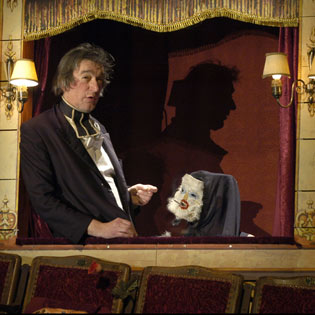
A little story: in 2002, i wrote him an email inviting him to go to Hong Kong for an artist-in-residence project for 6 months. Then he replied me not by email but a letter, a hand-written letter posted with a stamp!! I still remember the letter was written in capital letters, begins with "DEAR SELINA" and ends with "YOURS, BILL". I was so touched when I received it though the reply was negative.... unfortunately, i couldn't keep it as a souvenir but had to file it into the documents. Probably now a piece of torn paper.

I knew a bit of his work but never really seen one until in Paris. I was so excited to discover this solo show, which is so unexpected and yet marvellously beautiful !! There are 16 vidoes all together, a correct size for a video show in my opinion. Most of the shows in Paris museums are huge that determined to exhaust the visitors. 16 pieces is really good, on average 15 mins on each video, which is about the right running time of Viola's work, so you spent 3 hours for the visit and able to see almost all the work in complete.

I like in particular The crossing (1996), Catherine's Room (2001), Five Angels for the Millennium (departing angel) (2001), The Greeting (1995), The Veiling (1995) and Ocean without Shore (2007). His video gives audience a total experience (which hits me some much right now since I've been troubled with the word "exhibition" for a while), every single piece is an integration of visual aesthetic, sound, lighting, emotion, vision and imagination, and sometimes even physical movement of the space when the sound goes to a certain high frequency that the wall starts to shake!
Most of them are so emotionally intense yet all the images go so slowly, like taking a break from the reality to chew on the feelings of that particular single moment in life. The low frequency of the sounding system hypnotise the audience, you feel like you are entering into that moment of life, that you hear your own breathing, that you are completely surrounded by the vacuum of the distilled minute. Watching his video is like passing through redemption. He is a very meditative artist who like to explore the issues of life and death, memory and reality, suffrance and internal peace, emotion and detachment, etc. I like the title of the show, "visioni interiori", that's very Bill Viola !


I am not a big fan of video art, but Bill Viola is more than a video artist. He uses new technology to re-interprete the classical visual aesthetics. His images (the composition, the lighting, the colours scheme, the contrast, etc) are direct descendents of the italian renaissance, but the emotion and the attitude are contemporary, despite the fact that they are universal and eternal human predicament. When I stood in front of the five small screens of Catherine's Room, I coudn't take my eyes away from them ! The simple arrangement of the interior of each scene, the careful choice of colour (particularly the window and the fabric), the change of lighting, the slowness and tranquility of the movements... all the banality and confinement become such an immense visual pleasure, and every movement goes directly to the inner world of the personnage, so peaceful. At that moment, I dreamed to have some classical italian beauty and grace to be there in the scenes.

The other work, The Veiling, in which he set up 9 layers of silk screen with appx 30 cm of space in between, double projections from both ends through the silk layers. With the density of 9 layers, the images are perceivable but floating and sometimes nine-folded. It gives you the illusion of watching a 3D movie without the glasses on.
Ocean without Shore was created for the Venice Biennale last year. I haven't see the installation in its original scale. The version they are showing here is a looping of all the videos in the series. It's so powerful in terms of theme and images. It starts with black and white blur images of a person walking slowly towards the fixed camera. There is an invisible water screen in front, the moment when s/he passes the water screen, again everything in slow motion, the water splashes brutally on his/her body and s/he emerges from the water screen to a high-definition colour image, stunned himself as well the audience, he looks bewildered, troubled, excited and refreshed, like a rebirth or 1 minute in heaven. Then s/he truned quietly and passes again the water screen to his/her black and white blur world, sometimes, s/he would look back with nostalgic eyes, then disappears in melancholy. That's so powerful, really taking your breath away. It's the last video in the show and the latest of among the works as well, but the show is not chronological. When you finish a show with a powerful work, you look back with nostalgia too! An important consideration for a curator, I guess ! (Click to see the presentation of Bill Viola on Ocean without Shore)
Obviously, for Viola, the presentation (scenography) of each piece is perceived the moment the video is conceived. I appreciate the idea that artists create work with in mind the idea of showing instead of selling !

Bill Viola - Visioni Interiori / Palazzo delle Esposizioni di Roma / now - 06 January 09

29 January 2007

Babel - Epic of anxiety

"Come. Let us build a city for ourselves, and a tower, the top of which reaches the heavens. So let us make a name for ourselves lest we be scattered over the face of the entire earth.[...].

Come. Let us go down and let us confuse their language so that they will not un­derstand each other's language, each will not understand their fellow. So Yahweh scattered them from there over the face of the entire earth, and they stopped building the city."


-- Babel, Genesis (Chapter 11)

To prove Man's power, men started to build the Babel tower, and men ended up in miscommunication with each speaking his own language. Today, with all the technological advancement, the world is getting smaller and language barrier ceased to exist. Yet, people are more than ever incapable of understanding each other. The distance is the mental coldness and the barrier is our eagerness to be understood without the willingness to understand.

The Mexican director,
Alejandro González Iñárritu, created this epic of anxiety of modern man and woman who set their lives in Odyssey in search for reconciliation. In multiple inter-cut story strands, the film sets its four seemingly unrelated episodes in different country and native language. The first story takes place in Morocco when a goat-herder father passed on his two young sons a rifle he got from a black-market dealer to guard their goats from jackals. To test the power of the rifle, the aggressive and cunning young brother, Yussef, shot at a tourist bus and killed an American. In the hot climate of world politics, the incident was immediately blown up by the media to become a terrorist attack. In a fire confrontation with the police, the elder brother, Ahmed, was shot.

The second story takes place in a bourgeois home in San Diego where the Nanny (illegal immigrant from Mexico), Amelia decided to bring the two kids (Debbie and Mike) to Mexico to attend her son's wedding since she couldn't find a replacement. After the banquet, she confided the driving service back to San Diego to her nephew, Santiago (Gael Garcia Bernal), who is always charming but proved to be unreliable. To escape the border control, Santiago started a car-chase with the police. Amelia and the two kids ended up lost in the desert in desperation.

The third story is about the couple, Susan (Cate Blanchett) and Richard (Brad Pitt), who traveled to Morocco in order to recover from the grief of their recent lost of a third son. However, blame and misgiving followed them everywhere and griped them in every word they heard from the other. "I don't want to talk about it now." / "Tell me when you are ready for a confrontation!" They are drawing further away from each other with every passing moment in the trip. Then in a bus-ride through a mountain ridge, Susan was shot at the upper shoulder and dying.

The fourth story moves to Tokyo where the deaf-mute teen, Chieko, suffers from a psychic shock (witnessing the suicide of her mother) that affects her reality and moral balance. Her new life with the physically and emotionally absent father and her disabilities deprived her as a social and emotional outcast for all her physical allure. Loneliness and marginalized in the big, crowded city of Tokyo, she attempts to fill her strained, needful existence with a first sexual encounter. When a cop came up to her for an investigation on her father, she took the move.

Tragedy is universal
When men set themselves into endless Odyssey, tragedy becomes universal. All the stories are highly charged with dread and emotional tension as tragic incidents triggered by human stupidity and carelessness steadily multiply. We need no grand conspiracy to destroy someone's life but a mindless move or a little sign of impatience is good enough. It's only when looking back that we human beings are able to discern the thin line that separating the predictable and unpredictable consequence (the gun shot), the realistic and unrealistic decision (bringing kids to Mexico), the guided and misguided judgment (the car-chase), the contained and uncontained explosive impulsion of youth (Chieko's rebellion), forgiving and misgiving calculation between couples (Richard and Susan). With each story develops, the moment-to-moment focus in these life-and-death situations underlies a strong sense of irony that works like a last act of twist into a crime film. Yet, we see it clearly how innocent these people are, even the one who sets up the whole situation. "Misunderstanding" + "Bad Luck", is this the formula to the origin of human tragedy?!
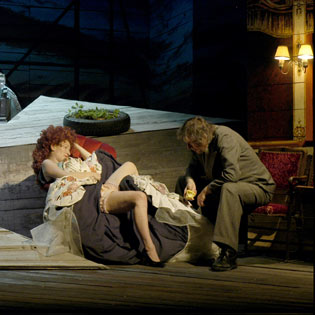
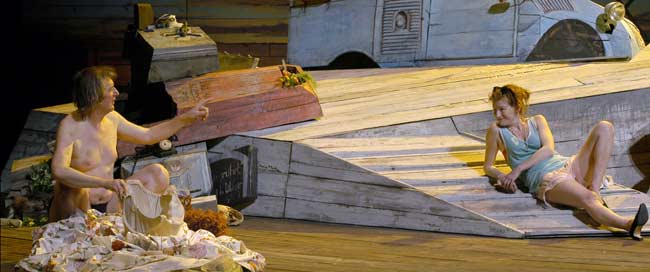
Sacrifice of the innocent
When mindlessness and impulsiveness become aggressive, they can be culpable. Yet, in the film, it's always the one next to the aggressive who checks the bill. Ahmed got two bullets to repaid the two shots of his younger brother (one at Susan, one at another police); Amelia and the two kids' lost-in-the-desert Odyssey is a direct result of Santiago's brutal outrage after long-term deprivation; Susan's shot and belated treatment due to vexed diplomatic difficulties epitomizes America's paranoid and predicament in present world politics; Chieko's fatal temptation of the cop is the revenge for her insecurity and abandonment by the society.

Have we ever tried to stop the sacrifice of the innocent?
When Santiago grasps the head of a chicken at one hand and spins at high speed the chicken's body with the other hand, I think of the poor American man beheaded and filmed in Iraq. Santiago breaks the neck of the chicken in 5 seconds, much shorter than the Iraqi soldiers. Head-off, the chicken runs away in a degree of pain which is beyond my imagination. Hilarious, the Mexican kids chase the chicken while Mike is totally chocked. The kids' insanity is comparable to those who watched the video of ultimate human suffering. In the next shot, we see Mike eating a chicken drumstick, deliciously.

Would you also be one of the lambs of God?

The helplessness and the selfishness
Gunshot, car horns, disco beats, light flashes, yells, boisterous banquets, latin music, telephone shouts, heavy traffic and noises in an overcrowded city... People pushing, jolting, rushing here and there in hysterical screamings for help, for attention, for love... Yet, in the epic of anxiety and frustration, they are alone and helpless. Chieko's deaf leaves her in total silence, disco for her is no more than flashes, she can't even dance to the beats; Amelia is trapped in the vaste empty desert with two kids; Ahmed and Yussef are caught in unspeakable fear for being an international terrorist; Susan is abandonned in a rural village with a veterinarian and a witch-like woman to save her life. We are captivated in an eternal state of inner anxiety and agitation.

The performance of Brad Pitt is irreproachable. In him, we see the helplessness and frustration of a man. Wealthy and strong, Richard believed in his ability to protect his family and his loved ones. Yet, his youngest son died in sleep and now his wife is dying in his arm and he couldn't do anything but wait for the mercy of some distant gods. For Susan's fear is of mortality but also the "unjust" of being an American abandoned in a remote third world reality. For Richard, all these are the greatest punishments and mockery from the hell. His final emotional breakdown during his phone call with his little son is one of the most touching moments in the film.

While he was waiting for a helicopter in incertitude, some elder tourists and kids were getting sick from the heat and requested the bus to leave. Under the urgent stress, Richard could no longer be rational but selfish. The bus finally left in fear of another attack, leaving Richard and Susan in the village among the "terrorist".

The reconciliation
Is reconciliation possible? Iñárritu said "yes".

Therefore, Yussef disarmed and pleaded, "I killed the American, I was the only one who shot at you. They did nothing... nothing. Kill me, but save my brother, he did nothing... nothing. Save my brother... he did nothing."

Therefore, the lost-in-desert was ended and saved. Amelia would probably be sent back to Mexico where a potential lover is waiting for her.

Therefore, the Japanese cop clothed Chieko with his coat and read her love letter in a restaurant.

Therefore, on the TV screen the Japanese restaurant, the anchor reports in Japanese the safe return of Susan to the States after a false drama of terrorist attack.

All the four stories are cleverly linked up at the end. Chieko's father is a great adventurer whose absence might be the cause of his wife's suicide. The cop came to Chieko not for her mother's death but a rifle her father might have sold to a Moroccan some months ago. Her father did, but as a souvenir to his Moroccan guide. The rifle was later sold to Yussef's father and with it, Yussef shot Susan. Due to the accident, Richard and Susan's trip in Morocco was delayed. Therefore, Amelia had to bring their kids, Debbie and Mike, to Mexico for the wedding. Then there is the car-chase and lost-in-the-desert. The rifle is the link between all these people and it turned their lives into peril.

The most evident defeat of the film is the complete waste of Gael Garcia Bernal's talent as an actor. He plays this charming and unreliable young man, very convincingly, yes, and that's all. He is largely reduced to a minor role and I came to the cinema for him! Even worse, up to now, I can't figure out what happened to him at the end? Compeletly lost! On the contrary, the fours kids' performance in the film is extraordinary!

Photo credit: Babel (2006) Alejandro González Iñárritu

19 October 2006

Glenn Gould : au-delà du temps

Documentary by Bruno Monsaingeon (France/Canada, 2005, 1h07mn)
13 Octobre 2006 20h30 Auditorium, Musee du Louvre

Glenn Gould plays Bach

Credit: vagifabilov (Norway)

This clip of the young Glenn Gould at practice shows his two most vivid qualities as a pianist -- a genius and an eccentric. Look at the way he hums, the way he moves his hands and his whole body, the way he places his piano, the way he puts his legs, the way he dresses, the way he searches for inspiration, the way his emotions overwhelmed him, the way his fingers flies on the keyboard, the way he stops his practice... nothing is "orthodoxical" as the rules for a classical pianist, in particular, his low position to the piano and his peculiar body movements. He was recognised as one of the greatest pianist of the 20th Century at a young age, but the canon rejected him for the fear of breaking down the so-call "system", another old story in the development of modern and contemporary arts.

Glenn H. Gould (1932 – 1982) is famous for his unique interpretation of Bach's Goldberg Variations. This Canadian pianist loved to hum while he played, his recording engineers once proudly explained how successfully he was able to exclude his voice from his recordings. These hummings for Gould are subconscious singings, and increased proportionately with the inability of the piano in question to realise the music as he intended. In another word, his voice becomes part of the music compensating the techinical problems of his piano.

When he plays, no matter in live performance or in recording studio, he has to bring with him his old chair his father had made even when it was completely worn through. This chair is so closely identified with him that today it was covered in a glass case and is in display in the National Library of Canada.

This genius gave up live performance at the age of 32 (in 1964) and concentrated on studio recording, simply because his piano music is not only for the audience to listen to, but to watch and listen to and move with. That’s why we can see him playing today. It is said that Gould would never play a piece the same way twice. His favorite is Bach, when he plays Bach, it’s not him who’s playing, but Bach himself comes to life. In the documentary, he says while playing The Art of Fugue, "this note is a mistake. Bach would have amended it if he were still alive."

Here comes the most beautiful interpretation of Bach's Goldberg Variations recorded in around 1981. Are you ready for an awesome moment of trance?

Glenn Gould plays Goldberg Variations Aria & var.1-7

Credit: opus3863 (Japan)

18 October 2006

Why not English -- On French as a language (4)

Chancellor Otto von Bismarck once said that the most important phenomenon of the 19th Century was that America spoke English. At that time, the sun was not yet set on Great Britain and the Eagle's feather was not strong enough for it to soar high in the sky. However, the two successive powers across Atlantic spoke the same language, is a historical phenomenon with very few precedents.


What was France doing at that time? France was first under Napoleon III in the process of Haussmannization of building grand boulevards and glittering cafes, and later the building of the Third Republic. It was all about being "Frenchy", a tag for cultural and identity pride.


Thanks to the Sun King, French had long been the "official language of Europe" unbeatable even by the British Navy. When the cook sportif woke up the country, the American diplomats were already standing in the Hall of Mirror demanding the 1919 Treaty of Versailles to be written in English as well, making the treaty a first in roughly 500 years of European history to have an English version. Should Jacques Chirac had been there, he would have said "No!" to the Americans. Earlier this year, this die-hard advocate of French (against English) stormed a EU meeting because his fellow Frenchman, Ernest-Antoine Seillière, chose to speak English. Why? Because "such snobbery from the leaders of some international companies to speak only the American business language is intolerable."


To the non-French-speaking tourists, Paris is "intolerable"-- no English signs, no English menu, no English local newspaper, no English chanels, no English broadcast...These are absent in the defense of French as a language. The French society and education environment don't encourage English. In scientific and medical researches, for example, France insists on publishing in French, this resulted in a great gap between the country and the world. New adventures and important discoveries remain unique to the francophone countries and incomprehensible to the outsiders. On the other hand, translation is quick to catch up the world trend. Almost all literary work published in other languages, including English, will soonly be translated into French. There is an efficient division of labour, the experts are doing the job so we people don't need to harsh ourselves to read English... even those "elite" students from l'ENS or la Sorbonne choose French translations than English originals, despite the fact that they are Postgraduate researches in the English Department.


However, it doesn't mean the French refuses to speak English. Once the students joined in the workforce, especially in the commerce, they know they have to deguise themselves with an international suit and they are more willing to speak English. In France, l'homme d'affairs, businessmen, do love to speak English, so do the cafe waiters and waitress in their penguin suit! Though it might be politically incorrect to request BBC English from every lips and tongue, the french just love their french accent when they speak English and they strive to keep their french trace, just like all spoiled kids love their milk moustache to remind you that afterall, they are kids!

8 October 2006

Nessun dorma

Nessun Dorma (Let No One Sleep), is my favorite opera aria. It was so heartbreakingly beautiful that everytime when I listen to it, I sink deep into it.

This aria from Giacomo Puccini's (1858 - 1924) opera Turandot (1920-1924), was written in 1924 and premiered on 25 April 1926 in Milan with the Spanish tenor Miguel Fleta as the Prince, Calaf. However, it was Luciano Pavarotti (b.1935) who made Nessun Dorma famous!

Here is the version Pavarotti in live in Paris 1998 (12 July, one day after the French championed the World Cup and one day before their National Day). It was a pity that at (1'58" - 2'12") in the video, there should be two lines of chorus which was missing during the performance. It was definitely a producer's faut not to arrange choirs!
Click 2 times on the Play icon, please.


Courtesy: boellebent (Demark)

Nessun dorma! Nessun dorma! (No one sleeps! No one sleeps!)
Tu pure, o Principessa, (Even you, oh princess,)
nella tua fredda stanza guardi le stelle (in your cold room look at the stars)
che tremano d'amore e di speranza... (that tremble with love and hope!)

Ma il mio mistero è chiuso in me, (But my mystery it is locked in me)
il nome mio nessun saprà! (And my name,no one will know!)
No, no, sulla tua bocca lo dirò, (No, no! On your mouth)
quando la luce splenderà! (I will say it, when the light will shine!)

Ed il mio bacio scioglierà il silenzio, (And my kiss will break the silence)
che ti fa mia. (that makes you mine!)

Voci di donne (Chorus):
Il nome suo nessun saprà... (His name no one will know...)
E noi dovrem, ahimè, morir, morir! (And we shall have, alas, to die, to die...!)

Dilegua, o notte! Tramontate, stelle! (Disperse, o night! Vanish, oh stars!)
Tramontate, stelle! (Vanish, oh stars!)
All'alba vincerò! (At daybreak, I will win!)
Vincerò! Vincerò! (I will win! I will win!)

Here is another version performed by the famous Three Tenors, Plácido Domingo, José Carreras Coll and Pavarotti in Dodger Stadium in Los Angeles for the 1994 World Cup finals with choirs.


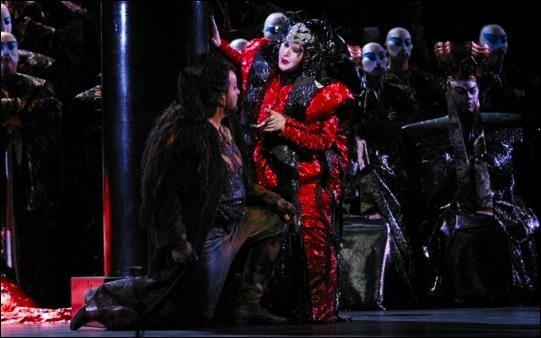
From the lyric, we know that it's not a sad piece of music, but the "heartbreaking" mood is in the melody. This is the opening song of Act III, when the Prince is singing alone on the stage, waiting for the sun to rise and for Turandot to love him. In the background, the Chorus' sombre repetition of Turandot's order that "No one in Pekin is allowed to sleep tonight, until his name is found out" is like a phantom besetting the Prince's hope, like the ghost of Lo-u-Ling waiting for her revenge. Though the prince is hopeful and confident in his words, the chorus lines remind him of the cruelty of Turandot, and his heart sinks (that's why I was upset with the Parvarotti 1998 version). The G major becomes the key signifying "dark hours before sunrise", inspiring the Prince's fear of a failing love and Turandot's terrified avoidance of a marriage with the unknown Prince. Love becomes a war, and everyone is agitated and sleepless tonight.

Turandot (1920 - 1924)

So, what's the story about? Who is Turandot?

Turandot is the beautiful cold-hearted femme fatale Princess of anncient China, whoever wants to marry her must answer her three riddles, either he succeed or he beheaded. In Act I, at night, when the moon rises, the unknown Prince, Calaf, was bewitched by her beauty when she first appeared in the balcony to give death order to the Persian Prince. Calaf stikes three times the gong posing himself as the suitor of Turandot.

Act II, Turandot explains in her famous aria In Questa Reggia that her ancestor, Princess Lo-u-Ling, was ravished and murdered by a foreigner, and now out of revenge she has sworn to never let any man possess her. She warns the Prince to withdraw, but he refuses. The Princess presents her riddles:

"What is born each night and dies each dawn?"
"Hope."
"What flickers red and warm like a flame, but is not fire?"
"Blood."
"What is like ice, but burns?"
"Turandot!"

The Prince suceeds and it's Turandot's duty to marry him. Turandot get angry and pleads her father / Emperor not to leave her at the unknown Prince's mercy. The Prince offers her his riddle, "Bring me my name before sunrise, and at sunrise, I will die."

Act III opens with Calaf's Nessun Dorma with the distant repetition of Turandot's order to search for his name. Calaf's maid, Liu, is tortured by the soldiers for the Prince's name. Liu, who loves the Prince, sings, "The name that you seek I alone know." Turandot demands it, Liu answers, "Love", and suicides. Terrified by Liu's suicide and Turandot's cold-heartness, the crowd withdraws leaving Calaf and Turandot alone on stage. Calaf tries to convince Turandot to love him but in vain. He holds her and kisses her, and she feels herself turning towards passion.

Finale: Dawn is breaking, Turandot approaches the Emperor's throne and declares, "His name is .... Love!" (Curtain falls)

The beauty of the Opera is in the enigmatic and poetic of the 3 deadly riddles and the final resolving riddle. Wasn't Puccini irrational in the Prince's dumb move of posing the last riddle to Turandot and giving her a chance to escap and chop off his head?

Well, Calaf doesn't say "Guess my name or you will die" but "Bring me my name and I will die". He actually wants to lose the game since whatever Turandot guesses, it would just be his name. He wants to marry her, of course, but he wants to defeat her cold-hearted defensiveness and have her fall in love with him. He will then die, in the sense of loosing himself completely to her and her love.

In Nessun Dorma, Turandot hasn't yet figured out all this love poetry business, and still thinks that she just has to get someone to reveal the Prince's name and then she can chop off his head. So she puts out a decree that no one in Pekin is allowed to sleep until the name is revealed.

When Puccini wrote the opera in 1902, it was a period of vexed relationships between China and the Western powers. In Europe, people were fascinated with Chinese art and culture at the same time, afraid of its "barbarism". Puccini's creation of a cruel Turandot while employing the beautiful Chinese folk songs as the musical themes for the opera is a classical love-hatred Western reaction towards China at turn of last century.

According to a interesting musicology study by Johathan Petty and Marshall Tuttle (2001), the Key signature is highly symbolic in the Opera. Throughout Act I, Puccini emphasizes Calaf's D Major (D) as leading tone to Turandot's E Flat Minor (Eb). This is a symbol of a definitive phallic threat from D which she seeks to deny. This threat is made explicit when Calaf rings the gong in D major, releasing energy that abducts Turandot's motif, and incites the Prince to modulate upward into Eb, signifying his surrender to Turandot's imperious beauty, as well the Moonrise and the position of Turandot in the highrise balcony.

In Act II, the solutions to Turandot's 3 riddles occur to the key scheme of D-D-Eb, precisely consistent with the psychological drama of the opera. "Hope" and "Blood" riddles are sung in D, Calaf's signature, "Turandot" riddle is self-evident in the Eb signature.

Then Turandot takes the patriachal C Major to plead to her father, when he insists that she should obey her own law, she crawls from C major up one octave to her father's C.

In Act III, Nessun Dorma starts with the chorus in Turandot's Eb, accending to Calaf's D. The power axis is reversed and thrusts Turandot's Eb and Bb down when the principle melodic material of the aria arrives in D, having released itself from the power of the Eb. And the final climax achieved on the word 'vinceró' is on A, the key which conquered Lo-u-Ling's Fb minor.


Courtesy: FamiliaOrero (Argentine)

This is another version by one of The Three Tenors, Placido Domingo, with The Metropolitan Opera in 1988, here the chorus lines are back and the stage design is wonderful.

This analysis of Petty (2001) gives another aspect of how music articulate psychological changes in the characters. Such as in Nessun Dorma, it's so touch simply because there are some many contradictory moods and emotions going on at the same, they are beyond the description of words but music!
Photo credits:
2002 coproduction of the Mariinski Theatre, St. Petersburg and the Festpielhaus Baden-Baden.

5 October 2006

Esquisses de Frank Gehry (2)

-- How big is an architect's Ego?

If the purpose of life is to leave trace in human history, the common men's trace presents in their offspring. From generations to generations, his gene passed on through birth and death, and he is remembered.

For an architect, his trace becomes ever-present in the imposing concrete. Be it a scar on your face, or the sacred water baptised on your forehead, you cannot escape its intervention. How big is an architect's ego? He wants a toy for his son, and he wants it to be the biggest, the tallest, and the most long-lived. Look at those most wanted architects today who are building their pantheons at every corner of the world, aren't them the men dispersing their sperms and gene in the planet earth?

Imagine yourself happened to be born a Haussmann in Paris or a Gaudi in Barcelona, would you not walk with a peacock's tail at your back? Whether what your great grandfather left for you is a labyrinth in Paris or a Cinderella's pumpkin castle in Barcelona, you have the biggest toy to marvel at. Only that your home is too small to store your toy!

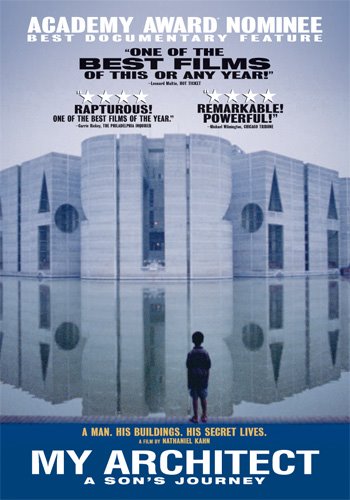
In My Architect, the introduction reads, " Everyman knows Louis I. Kahn, except one, his son!" So, this illegitimate son looks at the best toys his father prepared for him when he was just some years old. He said to himself, "my father is a great man!" All hatred disappeared, father-son reconciled. How glorious his toys become!

Photo credit:
MY ARCHITECT, Nathaniel Kahn, © 20003 Louis Kahn Project, Inc.

3 October 2006

Love at the last sight - A director's (almost) true suicide


Je vais bien, ne t'en fais pas (2006)
1h40min
Director: Philippe Lioret
Screen writer: Philippe Lioret & Olivier Adam
Adaptation: Olivier Adam
With: Mélanie Laurent, Kad, Julien Boisselier

This is the type of film in which the scenarist kills the director, and since the scenarist of the film is also the director, then it appears to me almost a true suicide.

95 mins out of the 100, you sit in front of the big screen, cursing the director, and at the last 5 minutes, you fell in love with him thanking him for inventing such a beautiful cinematic language.

You watch the movie as you look at a mirror fallen apart, pieces spreading on the floor, you ask the director, "why do you have to accumulate so many useless details? why you are not advancing your story? where is the focus? why you keep sidetracking?"

When you almost lose all your patience to stay in the cinema, the plot turned finally at the last 5 minutes and the climax builds up and falls sharp in the last 20 second, and the film is over! You flahsed back what happened during these 100 mins like a vacuum cleaner sucking up the broken pieces of the mirror, and you realized the most insignificant bits are the essential tissues of the film.

What a trick the scenarist has set up for the director!

2 October 2006

The first Sentence

Did you remember the first sentence that someone special in your life said to you?

如,假寶玉第一次看到林黛玉時說︰「這個妹妹,我見過﹗」

Why is the first sentence so important? As a person, s/he impressed you and this image stays with you the whole life. As a book, it catches your interest, and you can never put it down until the last page. This is the craftmanship of writing. A powerful first line is a strong blow to its readers, and you may fall in love with the writer immediately as you may fall in love with a person.

How the writers open their books?

Ernst Hemingway starts from nowhere with this sentence: "Then there was the bad weather" in A Movable Feast. It was like a trap, you found yourself standing at the middle of the universe, across time, across geographical boundaries, without time without boundaries, because he breaks away from the rule of time, space and people.

Similarly, 莫言 in【生蹼的祖先們】 has his first character coming to the scene from nowhere, and the air is suspended, intriguing the readers to dig into it like a grave digger, "第二天凌晨太陽升起前約有十至十五分鐘光景,我行走在故鄉一片尚未開墾的荒地上。……我正在心裡思念著一個打過我兩個耳光的女人。我百思難解她為什麼要打我,因為我和她素不相識。」

Another way of open the scene is to start with an action, and this action is as banal as possible, but later you will see it as the core of the whole story.
In Mrs Dolloway, Virginia Woolf starts with "Mrs. Dalloway said she would buy the flowers herself". This was a bomb to the literary scene when the book first appeared in 1925, not just in the sense that it focuses on a one-day-activity of Mrs Dolloway, but also the writing and this first sentence, which is so trivil that it bypassed the rhetorical announcement of all classical writings.

Talking about the great classics, nobody can forget the famous opening line from A Tale of Two Cities by Charles Dickens. "It was the best of times, it was the worst of times..." (see comment for complete quote). The power of this long first sentence is the doubleness, the pairing up, which was the theme and the structure of the novel, including London and Paris, Sydney Carton and Charles Darnay, Miss Pross and Madame Defarge, etc.

In Living to Tell the Tale, Gabriel Marquez starts with "My mother asked me to go with her to sell the house." and then the journey to sell the house evolved the story. The first paragraphy of the book is amazing, a friend said to me, "this is what makes a writer!" Yes, it's a beautiful paragraph, I am willing to be Marquez's typist for one time. Here you go:

"My mother asked me to go with her to sell the house. She had come that morning from the distant town where the family lived, and she had no idea how to find me. She asked around among acquaintances and was told to look for me at the Libreria Mundo, or in the nearby cafe, where i went twice a day to talk with my writer friends. The one who told her this warned her: "Be careful, because they're all out of their minds." She arrived at twelve sharp. With her light step she made her way among the tables of books on display, stopped in front of me, looking into my eyes with the mischievous smile of her better days, and before I could react she said: 'I am your mother.'"

How did I start my book? My first sentence is:

當時,奶奶是這樣對白妹說的︰「俺厝地址是福建省晋江縣陳埭鎮岸兜村前街祠堂邊第三塊厝。」

29 September 2006

Quartett - Heiner Muller and my nightmare

29 Sept 2006
20h30
Conservatoire National Superieur d'art dramatique
D'après Heiner Müller
Mis en scene: Matthias Langhoff
Décor,films: Matthias Langhoff
Lumières: Frédéric Duplessier
Avec: Muriel Mayette, François Chattot de la Comédie-Française
Photo credit: Theatre de la Ville


"Don't ask me!"
-- This is not a theatre critique。

[Enter Selina A and Selina B]
A. I am sad.
B. Pourqoui?
A. Can you imagine how hard it is for me to take this?
B. Quoi?
A. Can you imagine how sad I am?

B. Pourquoi?
A. Can you understand my frustration?
B. Quoi?
A. No, you can't.
B. Pourquoi?
A. Nobody understands.
B. Quoi?
[ A pause.]
A [Laughs]. Nothing! [turns away from B, goes out]
[B stands alone, perplexed]
(light slowly out, music Q12, goes.)

It's a very powerful performance, in adoptation, in directing, in acting and I love the set design... and yet, I sat there, motionless, like an alient fallen from the outer space... can you just tell me what you are saying??

I am sad. I am sad and frustrated -- for me, I understoo
d nothing! Why the language barrier is so high, so much higher than I imagined, too high for me to get over... I felt so helpless, so desperate... I can't understand what they are saying!!... I was a deaf in the auditorium. How much longer will it take for me to understand their langauge? their stupid french language!!??!!!

Hi? anyone there? anyone hear me??

27 September 2006

Sophie Calle

L'Erouv de Jerusalem (Installation)
27 Sept 2006
Musée d'art et d'histoire du Judaïsme
Hôtel de Saint-Aignan
Photo Credit: Sophie Calle

One of the most important and interesting figures of French contemporary art scene is Sophie Calle (b.9 oct 1953). Had seen the records and descriptions of her amazing works before but today was the first time I saw a real work of Calle, L'Erouv de Jerusalem.

Like her usual work, she plays with the ideas of memory and absence, privacy and public, intimate and voilence. In the installation, Calle asked the residents in Jerusalem to bring an object of their sweetest / bitterest memory to a public place during the Shabbat (a religious period when private and public domain is separated, i.e. no one and nothing can leave the house), and she photographied them with journals affixed to each personal memory.

Sophie Calle is the detective of urban life. In most of her works, she plays with the strangers from the streets, she is the writer, dirctor, actress and producer at the same time. She is a highly alert and inventive artist, the slightest flash or the most insignificant objects in life would become her inspiration. If you find the film Amelie Poulain (2003) amazing, you would find her work even more wonderful.

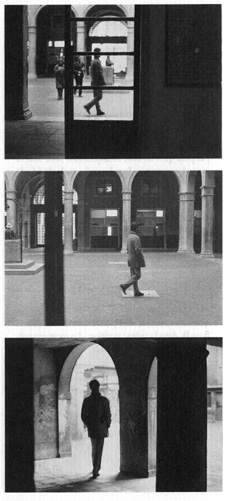
In Filatures Parisiennes (1978-80), she followed strangers in the street just like the 19th Century flaneur, she noted down their way and movements, and took photographical record of their activities, "not that I am interested in them, but just for the pleasure of following". In 1980, she followed a man all the way from Paris to Venice during 4 days, and this becomes the famous work, Suite Vénitienne (1980).

L'Hôtel
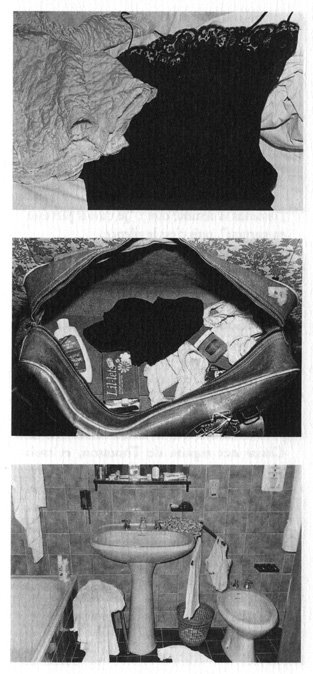
(1981), she found a temporary job in a Venice hotel as a cleaner for 3 weeks. During the work, she observes and takes photos of the personal affairs, the rubbish bins, the left-over food, etc. of the hotel guests, and reconstructs their relationships, their life and their thinking.

Le Carnet d'adresses
(1983), this is a very classic work of Sophie Calle. One day, she found by accident an address book in the street. She then contacted and met the strangers in the address book one by one with the aim to "reconstruct" the owner of the address book. At the end, an exhibition was organized, but it was finally closed down due to the objection of subject of the exhibition -- the address book owner!

Les Dormeurs
(1980s), 24 persons were asked to sleep in her own bed in succession during 8 days, they came alone or with their lovers, slept quietly or talked before sleep, or dreamt a lot... Sophie Calle photographied their gestures every hour. One time, a sleeper didn't show up, so she had to be one of the sleepers herself.

Voyage en Californie
(2003), the story of sleepers continues. In June 1999, an american boy called Josh Greene wrote to Calle asking if he could come to sleep in her bed in order to cure his broken heart. Afraid of an intrigue, she sent the bed with bedsheet and pillows to the boy in California. In Feb 2000, the boy sent the bed back to her when he was recovered.

Damien Hirst
(2003), Sophie Calle met Damien Hirst in 1989 in Glasgow. That evening of their first encounter, she asked him to write her a love letter. Later, she received a 5-page love letter from him, "a burning heart for a stranger". A year later, Calle wanted to interview Damien Hirst for her exhibition catalogue. However, she was too busy to do the interview that she asked him to makeup the questions that he imagined she would have asked him. The fictional interview was published. 12 years later, they reversed the roles, Sophie Calle asked Damien Hirst to interview her instead and he sent her a psychological test questionnaire for her and her family, the questionnaire with answers and test results were exhibited to the public in 2003 in Centre Pompidou.

Images:
1. Catalogue Cover, Sophie Calle, Centre Pompidou, 2003
2. Suite Vénitienne (1980)
3. L'Hotel (1983)
4. La Filature (avril 1981)

26 September 2006

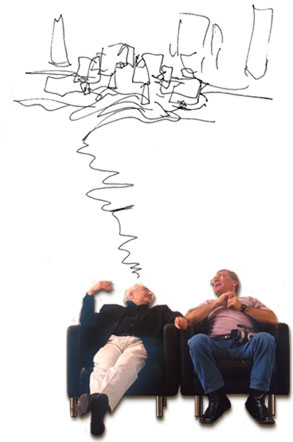
Esquisses de Frank Gehry (1)

Documentary (2000-2005)
Director: Sydney Pollack

26 Sept 06 16h36
UGC CITE LES HALLS


How do you feel when you look at the real buildings?
- Terrible! How could anyone allow me to do such a terrible thing. I want a place to cover up myself.
- From sketching to finishing, it takes such a long years to do a project. Too long, that when it's finished, i started to hate it.
- This building is one of my children, and this is the second time I see it. Maybe I would see it two or three times more in life, then, that's all...

How do architects work?
- From sketches, then paper models, then cardboard models, then digital models, then wooden models, then concrete buildings, then demolished....

Where do the inspirations come from?
- From wastepaper bin, from paintings, from a clip, from a fish....

Why you are so obessed with Fish?
- When human civilization can't advance, you have either to stop or to go back. And I choose to go back to millions of years ago when there is only fish!
- The day after seeing the fish sculpture model, the client called me, "Frank, we got a problem. You know, our clients pay thousand dollars to stay a night in the hotel, and we put them to look at the ass of the fish?!"

What is architecture?
- This is a concert hall, the auditorium is the most important, the others, are of minor importance.
- If the architectural presence distracts the spectators' attention, it's only that the paintings are not good enough.

Born in 1929 in Toronto, Frank Gehry was once a lorry driver, an airplane cleaner before he became known as Frank O. Gehry - the great architect. Graduated from Southern California University at the age of 25, he established his associate in 1963, at the age of 34. His artisitic view, however, was not gaining recognition from his contemporary at his young age. And he concluded that there was a anti-semitic sentiment against him, so he changed his name from Ephraim Owen Goldberg to Frank Gehry, to cover up his jewish trace.

Frank Gehry's work shows an influence from his modernist predecessor Le Corbusier, such as his Notre Dame du Haut. However, as a post-modern deconstructivist architect, Frank further breaks away from the symmetrical aesthetic and balance of modernist architecture. By creating anti-physics and lost centre-balance structures, his work were dominated with curves, visual conflicts, wraped walls, that they become unconventional but functional sculptures.

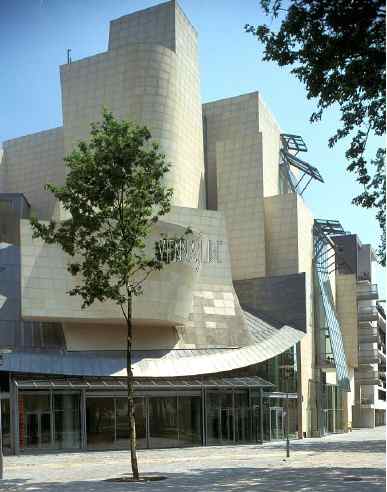
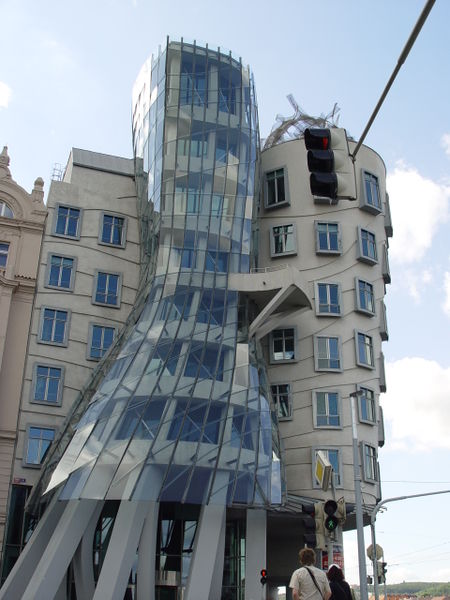
Selected works and images of Frank Gehry:
1. Vitra Design Museum, Weil am Rhein, Germany (1989)
(Photographer, Don Wong)
2. Frederick Weisman Museum of Art, University of Minnesota, USA (1990)
3. Disney Village, Disneyland Resort Paris, France (1992)
4. Cinematique Francaise, Paris, France (1994)
5. Dancing House, Prague, Czech Republic (1995)
6. Guggenheim Museum Bilbao, Bilbao, Spain (1997)
7. Walt Disney Concert Hall, Los Angeles, California, USA (2003)
8. Pritzker Pavilion, Millennium Park, Chicago, Illinois, USA (2004)
etc.

Official Website: Sketches of Frank Gehry