12 September 2006

又玩負離子?﹗

相片來源︰明報

2006 / 07 新髮 look

今個冬天,潮流又興返直髮,喜歡的話,束起一個髻,簡單隨便。
直髮要靚,最緊要是夠烏黑亮澤,還要厚。

11 September 2006

Can life be otherwise?

-- a post-mortem examination of a missed life


"Can life be otherwise?"
Have you ever asked yourself this question?

Oh, this is a question for the loser!
Yes, yes, you are right, this is a question for the loser.
And yet aren't we losers at a certain point of our life?

Do you really believe that you are in perfect mastery of your life?
Isn't our life consisted of millions of choices and probability?
....
chance encounter, chance success, chance failure, accidental variations...

cross roads, turn left, turn right, upstairs, downstairs...
"to be or not to be?"
....

Then, one day we wonder how life would be if we bought the film tickets for 7:30pm instead of 9:45pm? if we went to KFC instead of McDonald's? if we telephoned B first instead of A? if we sat at row H instead of K? if we cooked rice instead of spaghettis? If we did go to Prague? if we did ask that question? if we didn't rise our hand in the lecture hall? if we did get up that evening? if we didn't sing that song?
...

Do you know that history can be otherwise?

Do you know why Nagasaki was chosen as the target after Hiroshima? Do you know that originally Kokura was the first target to be bombed? On 9 August 1945, three aircrafts took the mission to drop the bomb "Fat Man". Weather was reported clear in Kokura. However, one aircraft mysteriously missed its route, when they reached Kokura 30 mins later than planned, a 7/10 cloud had already covered the city, so they flew to Nagasaki.

Do you know Nagasaki might not be bombed? Again, mysteriously an oil reserve tank of a second aircraft had failed before take-off, it might have to divert to Okinawa due to insufficient fuel to reach Iwo Jima. So, the initial plan was that if Nagasaki was obscured on their arrival they would carry the bomb to Okinawa and dispose of it in the ocean.

At 11:00 am, the three aircrafts arrived Nagasaki and the weather was obscure. At 11:01, a last minute break in the clouds over Nagasaki allowed the bombardier to sight the target. The "Fat Man" was dropped over the city and 43 seconds later, the sky was obscured again and 70,000 Nagasakians were killed instantly.

What's the calculation? What's the probability here?


Do you know that cities can be otherwise?


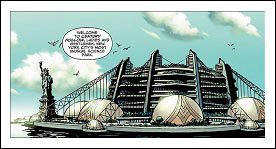
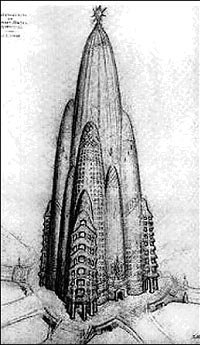
There is this comic book called Manhattan Guardian which is set in a Manhattan not chosen, the other Manhattan rebuilt with architectural projects not realised : Antonio Gaudi's New York Hotel, Hans Hollein's Rolls-Royce Building, Frank Lloyd Wright's Ellis Island Key. Can Manhattan in fact be the other Manhattan?

Have you ever thought about this, that the twin towers could have not be there on 11 September 2001?

Yet, in our life... how many paths not taken? how many trains missed? how many love abandoned? how many words misinterpreted? how many people misunderstood?

Photo courtesy: http://en.wikipedia.org

10 September 2006

Obscene Nudity

Recently I love to use these two words in my writings - Obscene nudity
The gladiator in its obscene nudity
The lightbulb hanging on the wall in its obscene nudity
The rejected love floating in the air in its obscene nudity

What does obscene nudity mean?
Isn't nudity itself obscene?

No, nudity itself is not obscene. Nudity itself is beautiful.
A gladiator's nudity is beautiful in which we see strength and courage.
A lightbulb's nudity is beautiful in which we see the source of light and warmth.
A love's nudity is beautiful in which we see devotion and hope.

Why do they become obscene?

Let's first understand what obscenity means. No need to consult your Oxford or Cambridge dictionaries, let's understand things in their simpliest forms.
For example, a child of 10 is dancing in front of you, moving his / her ass from left to right, imitating his / her adult models in the initiation of an erotic encounter. Yet they have no idea what that means, they don't know what love and courting are, just imitation. Is this not obscene?

For example, a sucessful lawyer is earning so much more than necessary, so much so that he doesn't know what to do with his money, yet he knows his money comes from the so call "legal process of merging", in which the less privileged were exploitated of their living. Is this not obscene?

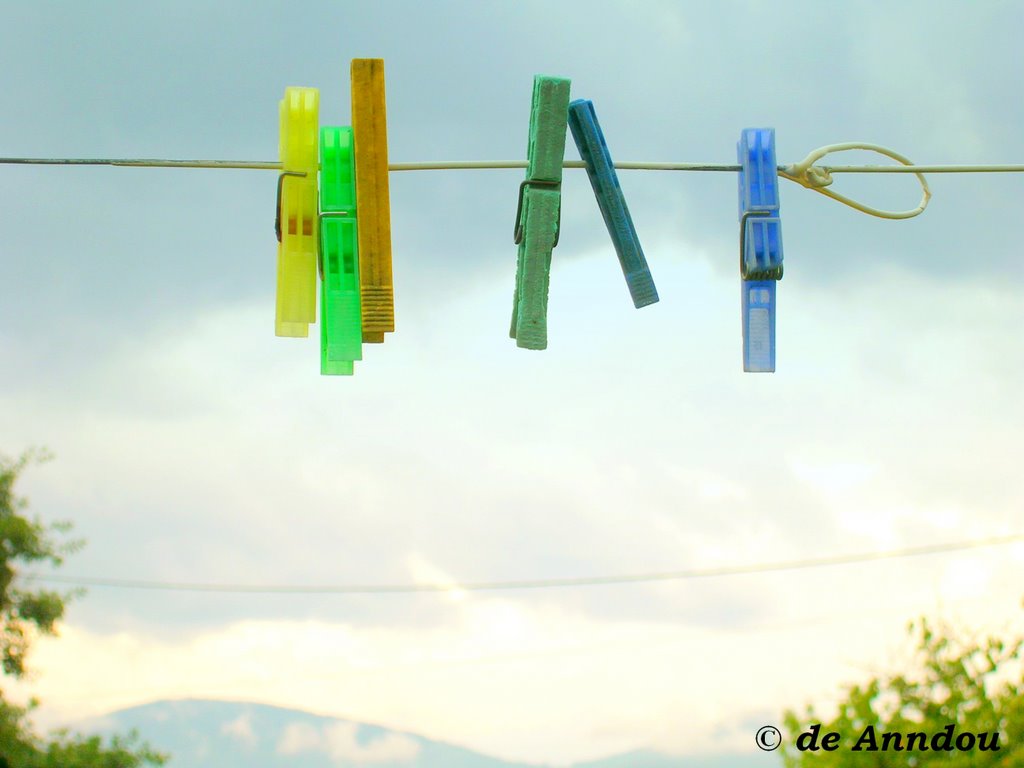
So why did I say the plastic tongs in the picture is the gladiator in obscene nudity?
A gladiator's nudity becomes obscene when there is nothing for him to fight against, when there is no longer need for his strength and courage. His display of strength and courage amidst this nothingness becomes obscene.

Why the lightbulb hanging on the wall is obscene?
Because today what we want to see is not the source of light and warmth but the artificial beauty enchants us in a cover.

When does love's nudity become obscene?
When love's expression meets no reciprocation, it's nudity becomes obscene. When love is exposed, but then rejected, and there is no way to withdraw, to shelter it, and it continues to be exposed in the air, it becomes obscene.

You see, today we live in a world without hero. Because we don't need hero. All heroic acts are rendered obscene. Yet all of us want to be somebody, to become a hero. That's why our world today is full of obscene nudity!

9 September 2006

Le Bon-isme : on french as a language (3)

"Bon courage et bonne continuation!"

A friend is leaving Paris for good, and he sent me this sms. I tried to translate them into english and find no equivalent terms. What would we say in English? Probably "work hard and take care".

"Bon courage" is the coquettish french cousin of "work hard" but literarily, it means "have a lot of courage". For the french, they say "bon courage!" to someone who has to accomplish a task or when they find someone morally weak. By saying "bon courage!" they mean to give them moral support than to push them to work, such as in "work hard". Sometimes the french say "travaille bien!" = "work well", but they would never ask you (or themselves) to work "hard"!

In Chinese, we say "add oil", 加油! It's an equal moral support to "bon courage". One time a friend shouted "add milk!" to kids in a running competition. "They are kids, they need milk to be stronger." So we adults need "oil" to function better? like all machines?! This is a moral support takes the form of a physical or even mechanical appearance.

The Japanese says "kanbate". What I understand is that "kanbate" means both 加油、努力, "bon courage" and "work hard". An online translator says "support you always!" But in formal Japanese it should be "Kanbate Kudasai" = "kanbate, please", in this case, "kanbate" means "work hard" more than "bon courage".

So, instead of telling you to work very hard, your french cousin seduisant/e (seductive) wishes you in a sweet and mysterious voice: "May the force be with you!"

"Bonne continuation!" is even more tricky. When you are at the middle of doing something, your french cousin comes to you, "ça va?", and you are obliged to reply "ça va!" Because "ça va pas!" is considered impolite and vulgar, therefore forbidden. Why? You don't bring up bad news at the very beginning of a conversation, this is the rule! Be polite and considerate, you spoil your french cousin's mood and jump to your personal misfortunes at the very second by saying "ça va pas!" Remember this, your french cousin is equally egoist as you are, so show a bit of concern for your cousin first, and reply "ça va! et toi?"

So the conversation goes on...... for 5 minutes. Your french cousin tells you it's time to leave, and wishes you "bonne continuation" with your work, because you never have the chance to reveal to your cousin that "ça va pas!" It's not working, I have a problem! By the time your french cousin affectionately kissing you goodbye, sincerely wishing you good continuation with your work with the same degree of "pleasure", your bitter smile then hints that there is a problem, so there you stand at the doorway, and the conversation goes on...... for 30 minutes!

Your almighty french cousin invented lots of greetings and formalities to threaten you. Oh, ma pauvre! ça va? Oh, c'est pas grave!

This week the slogan is "bon retour!", "bonne rentrée!" Good return! Everyone is back from holidays, everything resumes to normal after a month of human deployment and close-door policy.

You go to a bakery, the 20 - second dialogue goes like this:
- Bonjour, Madame!
- Bonjour! Je voudrais une baguette, si vous plaît!
- 1 euro! Merci!
- Merci!
- Bonne journée! Au révoir!

A climax of "!" accumulated in the 20-second exchange for a hard-warm-baguette! Then you fled the bakery feeling abolutely lost.

During the day, you say "bonjour", "bon après-midi", "bon soir". But when you leave your friends in the day, you say "bonne journée!" In the evening or early morning at 02h00, you say "bonne nuit" if your friends are going to sleep, otherwise "bonne soirée" for them to have more fun in the night or the morning!

Before open your month to eat, you said "Bon appétit!" Before you sip your glass of famous Bordeaux, you said "Bonne santé!"
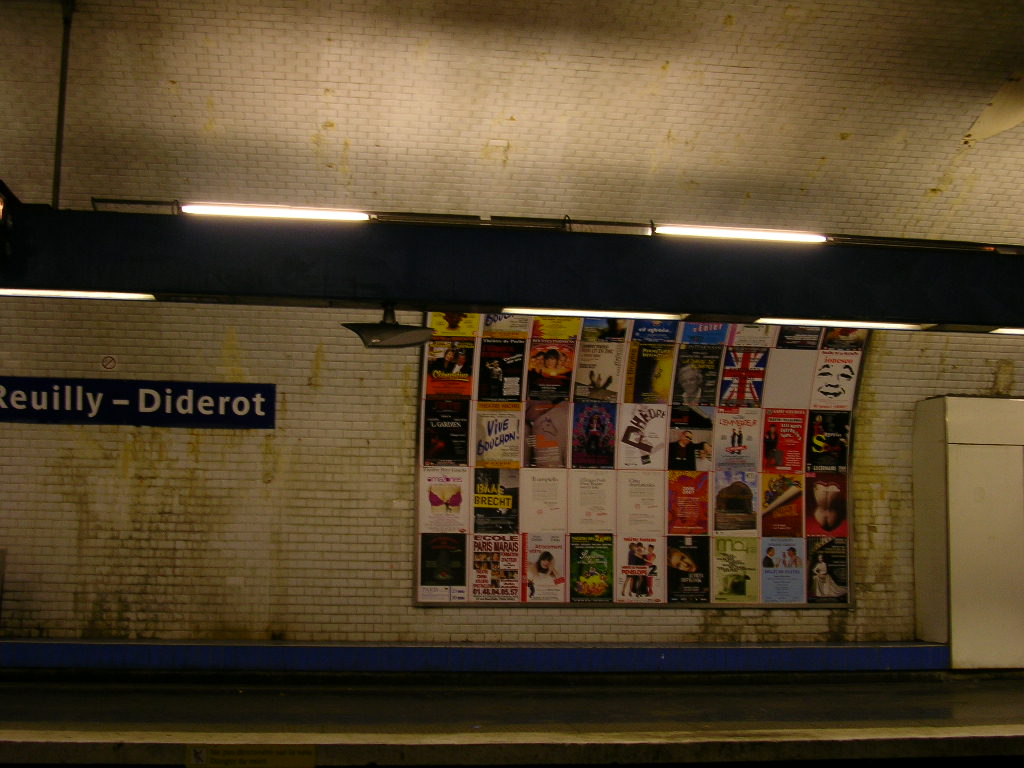
On Monday, you say "bonne semaine!" Have a nice week!
On Friday, you say "bon weekend!" Have a nice weekend.
On Sunday, you say "bon dimanche!"
On holiday, you say "bonnes vacances!"
On festival, you say "bonne fête!"

A friend goes home, you say "bon retour!"
A friend drives a car, you say "bonne route!"
A friend takes a TGV, you say "bon voyage!"
A friend cooks for you, you say "très bon!"

You take your chance, you charmant/e french cousin wishes you "bonne chance!"
You spend your holiday in France, s/he wishes you "bon séjours!"

You ask why there are so many "bon"s and "bonne"s in French?
Your adorable french cousin says "bon courage!" and gives you a bonbon!

Oh, Bon Dieu!

8 September 2006

凋零


凋零的,就不美嗎?
我偏愛它的凋零。

擦掉了的字語,
擦不掉的筆跡。

時間就此溜走,
我們能不說再見嗎?


《凋零》(2006)
攝影 © de Anndou

The modern hero


So here you stand,
the guardian of banality.

you never sweat to the burning sun,
you radiate under the mournful sky,
you hold on to life in the wild wind,
you drop your tears for a shooting star.


you are the gladiator in obscent nudity,
you are the philosopher in silent resistance,
you are the prince in abandoned territory,
you are the Odessey in eternal captivity.
The Modern Hero (2006)
Photographie © de Anndou

Alas, this is the age of no hero!

you and you alone,
fighting against today and today...
the never ending repetition
of today and today...

6 September 2006

The Crying Face


time flies,
like arrow breaking through the air!
words untold, voices unheard,
can we not say goodbye?


The crying face
(2006)
Photographie © de Anndou

5 September 2006

C'est la Rentrée

When we jealously criticize the anti-industriousness of the French working system, we secretly imagine ourselves enjoying the same 35 weekly working hours and the 45 days of annual leave that a French employee enjoys. The long August vacation is ever tempting. Imagine yourself lying on the beach, reading and daydreaming nonstop for 30 days, i.e. 920 hours, with no hurry and no worry for whatsoever. Isn't life great?!

If you are panicky amazed by the figures above, you would be even more stunned with their la rentrée (the return). In France, a new year begins not on 1 January, not on 1 April as our new fiscal year, but in la rentrée. La rentrée is the equivalent of September, when school year starts again. As students, we used to plan our new timetable and swear to be hardworking. Once we left school, September lost its freshness and grandeur. And the French keep it. It's the return from long vacation. It's the return with a new suntan look, and a fresh spirit.

Some days ago, the Spanish paper said that 35% of Spanish suffered from the post-vacation syndromes, i.e. the depression of returning to work. Do the post-vacation syndromes exist in France? If they do, they are relieved by la rentrée.

So what's the magic recipe of la rentrée?
- la rentrée of sports
- la rentrée of literature
- la rentrée of art
- la rentrée of cinema
- la rentrée of books
- la rentrée of dance
- la rentrée of concert
- la rentrée of shopping
- la rentrée of restaurant
........
Doors reopened in the city, new programmes and products were prepared for the year.

Since Paris, and many other big cities were virtually empty in August when all the French fled for the seaside, the city life energy acuminated and impatiently waiting for exploration. And the French themselves too, had retreated from the crowd and the city for a whole month, now they want something exciting and hilarious. They don't need to follow the Spanish researcher's advice of separating the holidays into two or three, since they are professionals in this field and they have an exciting la rentrée waiting for them. The only point is, you better to like taking part in cultural activities in Paris. Otherwise, la rentrée can't really cure your depression should you have one.

I appreciate the thinking of having a break and a fresh start, though I am not myself diehard advocate of Play hard and work hard formula. Of course, going back to work is the same repulsive idea but if you had really long holidays, say 30 days, perhaps you start missing your job… is this the clever strategy of the French employers?

4 September 2006

The girl who cried in the metro

Had my transit from Metro line 6 to line 7 this afternoon, I boarded the train in Place d'Italie, and this girl was pleading for a small piece of coin to eat. She was about 18, a bit clumsy, in black t-shirt and black jeans. Her appearance does not differ much from other teens in the street. She was looking at the passengers, soliciting their sympathy with her simple sentence, "I am really hungry, please, if you have a coin for me..." She did not enter the metro with a usual rhetorical salutation and a fabulous speech, but very plain and genuine request, une piece pour manger. She's not a professional beggar; she's rather decent and clean in the way she dressed. She must have a shelter, so she's not homeless...

She looked at the crowd around her, and met no eyes, no sympathy. She was disappointed, anxious, embarrassed and helpless. She had no idea how to convince them to help her. Hesitated, she stood there, lost all her words, the air was chilling in the wagon of 27 degree Celsius. She looked around, were they all deaf? were they all blind? or just that she was born transparent? She was ashamed of herself and desperated with the indifference of the people around her, she dropped her tears.


At which point did her life turned wrong? Was she too lazy to work at school? Was she abandonned by her parents at young age? Did she once run away with a stupid guy?

Tears on her face, and she did not bother to wipe them off; just like the poor beggar's face dusted by a rich man's car.

The guy next to her gave her a 20-cent coin. She was grateful for him and she gathered her courage once again, and asked, "I haven't eaten anything today, please help me, or if so happen that you have a sandwich or an apple with you." This is her final plead. Anything would do... please...

Under what circumstance would we have the courage to seek a stranger's sympathy and mercy? How low can human dignity be? How hard is the feeling when no one bothers about your sincere plea?

It's very difficult to stay cool and indifferent in this kind of situation. I am not yet trained for this. So, I gave her two euros. She was a bit surprised. And I thought immediately, am I encouraging her to continue her life like this? Is this the reason for the Parisiens' reluctance to respond? Or simply their usual attitude that "the State will do"? Or that they are used it to? Why their Fraternite does not extend to people outside their social class? Are they all fed up with these beggings? Is this their blase attitude to maintain their inward balance and not to be upheaved by the emotional shocks?


Imagine this is your sister, imagine she was lost and found, imagine she told you the story in the metro that she was starving and no one helped her. Would you wished so dearly that they would have had given her a piece of coin or a half baguette? Imagine I had a car accident in Paris (touchwood!), far in HK, in the US, in Taipei, in London, in Madrid, in Tokyo, in India... would you hope that a stranger in Paris would have had helped me and saved my life? because I am your friend? because I am the one you love? and this day, we don't bother with this girl crying in the metro because she is not my friend, because I don't have love for her? Look at her, look deep into her wet eyes, and you see love, the love from her parents, the love from her borthers and sisters, the love from her friends, the love from her dog... they are all pleading you... And you have love, love at your heart which extended to her, her family and frineds, and her dog... all of them are strangers to you...

Is my sympathy hypocritical? How far are they differed from each other, sympathy and hypocracy?


The number of beggars in Paris is far greater than I have imagined. At every turn of the street, there is a homeless sitting or kneeing there, with a paper sign asking for a coin. This group is the silent pleaders, they do not look at people, they sat there quietly, heads down, staring hopelessly at their moneybox. Their regretful face tells you that "all I need is just a chance". They knew they have no good excuse for their situation today and they ask for a chance. The opposite is the rhetoric group. They are not homeless like the first group, they are the almost life-long unemployed so they become professional beggars. They enter the metro and telling you how step by step, one accident after another, that they sank into the bottom of the society. They positioned themselves as the victim of social injustice, of human predicament, of a fate neglected by God… They ask for your understanding and justice, and telling you not to commit the same mistake, finally they wish you good health and a fulfilling life. Then they come to you one by one asking for a coin to live decently.


The third group is the merry-go-round beggars, they have a happy life even though, and they live in community. They have dogs, friends, wine bottles and cigarettes with them. Metro platform is their favourite hang out place. They got drunk from time to time, teasing the beautiful women passed by, threatening guy... they are usually the dirty old men who lead their life happily as a homeless. The fourth group is the most aggressive one, they grasp your arm in the street and ask you for a coin. They are mainly old ladies, most likely gipsys, and most of them don't speak French. So they targeted at the tourists.


Can anyone tell me why there are so many beggars in Paris?